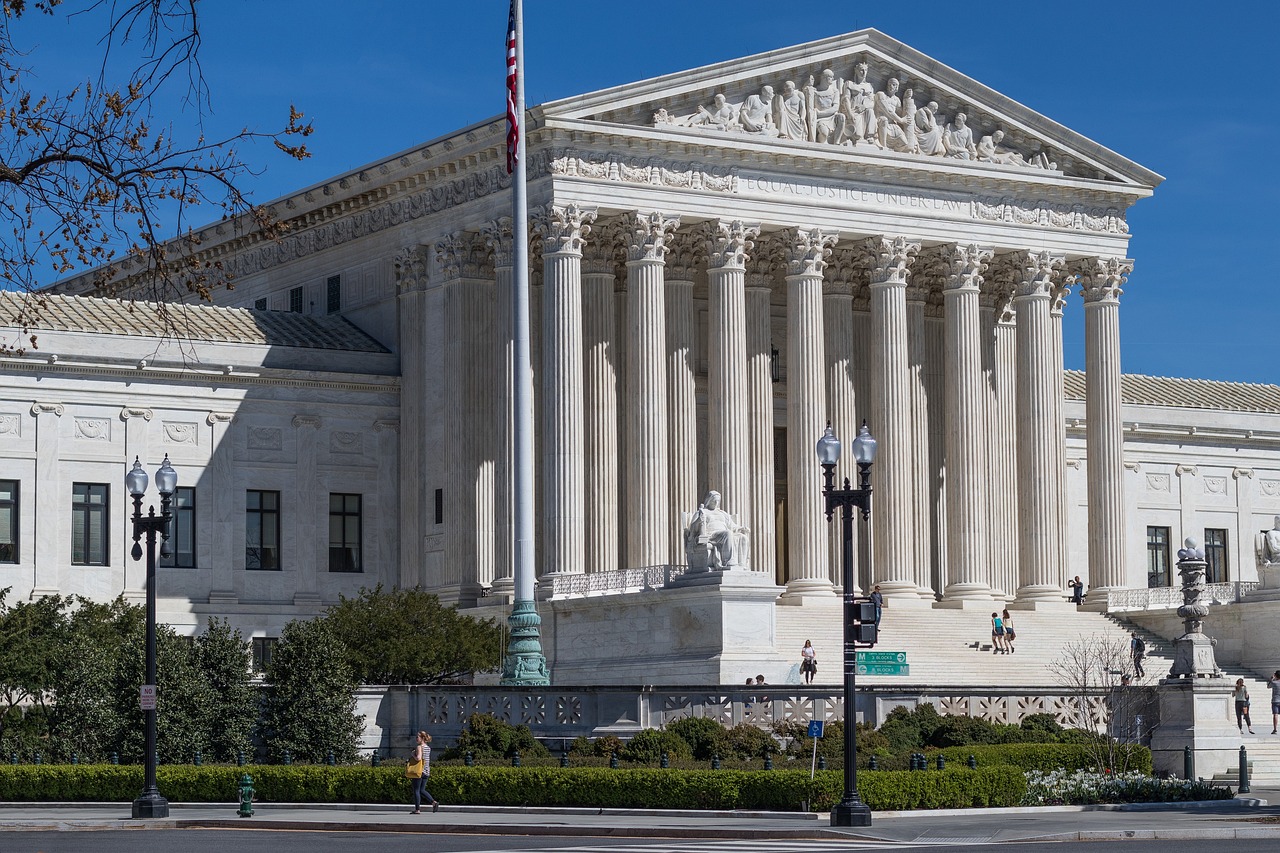
The United States Supreme Court has agreed to take up a dispute over whether the public can obtain internal records from the Department of Government Efficiency (DOGE), the cost-cutting initiative closely associated with billionaire Elon Musk in the opening months of President Donald Trump's second term. The decision, announced on Tuesday, 13 October 2026, marks the second time the justices have intervened in the case.
The case pits the Trump administration against Citizens for Responsibility and Ethics in Washington (CREW), a watchdog organisation that has sought documents about how DOGE was organised, financed, and run. At its core is a question that reaches well beyond one office: when does a body working inside the White House count as a federal agency subject to the Freedom of Information Act (FOIA), and when is it merely a presidential advisory group shielded from disclosure?
The justices have not yet ruled on that underlying question. By agreeing to hear the administration's appeal, they will decide a narrower but consequential preliminary issue: how much evidence CREW may gather — including documents and a sworn deposition of DOGE's acting administrator, Amy Gleason — to prove that DOGE exercised enough independent authority to fall under FOIA. Arguments are expected early next year, with a decision possible by next summer.
A lawsuit that has already reached the court once
CREW sued after the government declined to process its FOIA request for records about DOGE. The watchdog argues that DOGE functioned as a federal agency in practice — directing cuts, cancelling contracts, and reshaping parts of the federal bureaucracy — and must therefore open its files like any other agency.
The Trump administration sees it differently. It contends that DOGE operated as a presidential advisory body, offering counsel to the president rather than wielding independent power, and that FOIA's disclosure requirements do not apply to such bodies. Forcing disclosure, the administration argues, would intrude on the confidentiality of presidential advice and on the separation of powers between the executive and judicial branches.
Lower courts have so far sided with the watchdog. US District Judge Christopher Cooper ruled in CREW's favour and ordered the government to process the records request on an expedited basis. A panel of the appeals court also backed CREW, clearing the way for the group to obtain internal records and to question Gleason under oath.
The administration then returned to the Supreme Court, arguing that the appeals court had ignored the justices' earlier guidance. In 2025, the court's conservative majority had already intervened once, reining in a broad district-court order for DOGE records and holding that the judge's original demand for documents was too sweeping at that stage of the litigation. In that earlier action, the majority said that separation-of-powers concerns counselled judicial deference and restraint when courts order the executive branch to hand over internal communications.
Now the administration says the lower courts have still gone too far. It argues that the revised order continues to demand excessive disclosure and that the appeals court improperly authorised a deposition of a senior official. In the administration's telling, subjecting advisory bodies to intrusive discovery triggers exactly the concerns Congress sought to avoid when it excluded presidential advisory bodies from FOIA's reach.
What DOGE did — and why its records matter
DOGE was launched as a signature initiative of Trump's second term, charged with cutting federal spending, shrinking the workforce, and dismantling programmes the administration viewed as wasteful or misaligned with its agenda. Musk served as its public face during its first months, although he was not its formal administrator. The White House has since said DOGE no longer operates as a centralised entity.
In its early months, the initiative moved with unusual speed and breadth. It was associated with the departure of tens of thousands of federal workers, the dismantling of bodies including the US Agency for International Development, and the cancellation of billions of dollars in contracts and other spending. Supporters cast the effort as a long-overdue reckoning with a bloated federal government; critics described it as a blunt instrument that cut essential services and expertise alongside waste.
The question of what DOGE actually achieved has itself become contested. A report by the Government Accountability Office, Congress's nonpartisan watchdog, concluded that the group had repeatedly overstated its claimed savings, taking credit in some cases for leases cancelled before it existed and for terminations that did not occur. The administration has disputed characterisations of its record, but the GAO findings have fuelled demands for the underlying documents — precisely the records at issue in the CREW case.
That is why the litigation matters beyond legal doctrine. FOIA requests and lawsuits are among the few mechanisms by which the public can reconstruct what a fast-moving, opaque initiative actually did: which offices it targeted, on what authority, with what analysis, and at what cost. If DOGE is treated as an agency, its records become substantially more accessible. If it is treated as an advisory body, much of its paper trail could remain closed.
The legal question the justices will answer
The Supreme Court's eventual ruling will turn on how it characterises DOGE's real-world role. FOIA applies to federal "agencies," a term courts have interpreted by looking at substance rather than labels. A body that exercises substantial independent authority — making decisions, directing other agencies, controlling funds — is more likely to be treated as an agency. A body that merely advises the president, leaving decisions to others, is more likely to fall outside the statute.
CREW's argument is that DOGE cleared that bar by a wide margin. The group points to the scale and directness of DOGE's interventions across the government, arguing that an operation of that reach cannot plausibly be described as a mere advisory shop. The administration counters that the formal structure matters: DOGE advised, the president and agency heads decided, and courts should not use discovery to second-guess that arrangement or to pry into the president's confidential counsel.
The deposition question adds a further layer. The administration objects to CREW's plan to question Gleason under oath, arguing that compelling testimony from a senior official in this context intrudes on executive-branch autonomy. CREW responds that testimony is necessary to establish the facts about DOGE's authority — facts the government has not fully disclosed through other means.
The justices' decision on these preliminary questions will shape the litigation's path. A ruling favouring the administration could narrow or halt the evidence-gathering, leaving CREW with a thinner record on which to prove DOGE was an agency. A ruling favouring CREW would let the fact-finding proceed, and could set a precedent for how courts handle transparency claims against White House-adjacent operations in future administrations.
A broader fight over transparency
The case arrives at a moment when the boundaries of executive secrecy are being tested across Washington. The Trump administration has repeatedly invoked executive privilege and separation-of-powers arguments to resist disclosure, while watchdog groups and journalists have argued that the public's right to know has not kept pace with the growing concentration of power in White House offices that sit outside the traditional agency structure.
That structural shift is part of what makes the DOGE case significant. Modern presidents increasingly govern through White House councils, task forces, and special initiatives that do not fit neatly into the agency framework Congress designed FOIA around. If those bodies can operate with the reach of agencies but the secrecy of advisory staff, transparency advocates warn, the disclosure law risks becoming an artefact of an older, more compartmentalised government.
The administration's supporters offer the opposite warning: that aggressive disclosure orders risk chilling candid advice, deterring qualified people from serving, and dragging courts into the daily management of the executive branch. The Supreme Court's 2025 intervention reflected sympathy for that concern, emphasising deference and restraint. Whether the justices extend that logic further — or draw a line — will be the central drama of the coming arguments.
The case also illustrates how Musk's political role continues to reverberate through American institutions long after his formal involvement in DOGE ended. His tenure at the initiative made him one of the most consequential unelected figures in the second Trump administration, and the legal battles over DOGE's legacy are now being fought in the courts rather than in the West Wing.
What happens next
The Supreme Court will hear arguments in the case in the coming term, with a decision expected by the summer. Until then, the lower-court orders remain contested, and the full scope of what CREW can obtain remains uncertain.
Whatever the outcome, the ruling is likely to echo beyond DOGE. It will help define the rules for the next White House initiative that claims to advise while acting — and for the next watchdog, journalist, or citizen who asks to see the records. The question is not only what DOGE did, but what the public is entitled to know about what its government does in the president's name.
As with other high-stakes appeals, the court's handling of the case will be closely watched. The justices have in recent terms repeatedly been asked to referee disputes between the executive branch and those seeking to hold it to account — a role that, as in other appeals reaching the court, places the institution at the centre of the country's most polarising questions.
Frequently Asked Questions
What did the Supreme Court decide on 13 October 2026?
The court agreed to hear the Trump administration's appeal in a lawsuit by the watchdog group CREW seeking records from DOGE. It did not decide whether DOGE must disclose its records under FOIA; it will decide how much evidence CREW may gather to prove DOGE counts as a federal agency subject to the disclosure law.
Why does it matter whether DOGE is a federal agency?
If DOGE is a federal agency, it is subject to the Freedom of Information Act and must process public requests for its records. If it is merely a presidential advisory body, FOIA's disclosure requirements do not apply, and much of its internal paper trail could remain closed.
What has happened in the lower courts so far?
US District Judge Christopher Cooper ruled in CREW's favour and ordered expedited processing of its records request, and an appeals court panel also backed the watchdog, allowing it to seek documents and a sworn deposition of DOGE acting administrator Amy Gleason. The Supreme Court intervened once before, in 2025, narrowing an earlier, broader order for records.
Who is Amy Gleason?
Gleason held the title of acting administrator of DOGE. CREW seeks to question her under oath about how DOGE was organised and operated; the administration argues that compelling her deposition intrudes on executive-branch confidentiality.
When will the case be decided?
Oral arguments are expected early next year, with a decision possible by next summer, according to reporting on the court's order. The timing means the ruling could land well into the next phase of the legal and political debate over DOGE's legacy.
Sources: USA Today · Associated Press via ETV Bharat · Bloomberg Law · Times Now