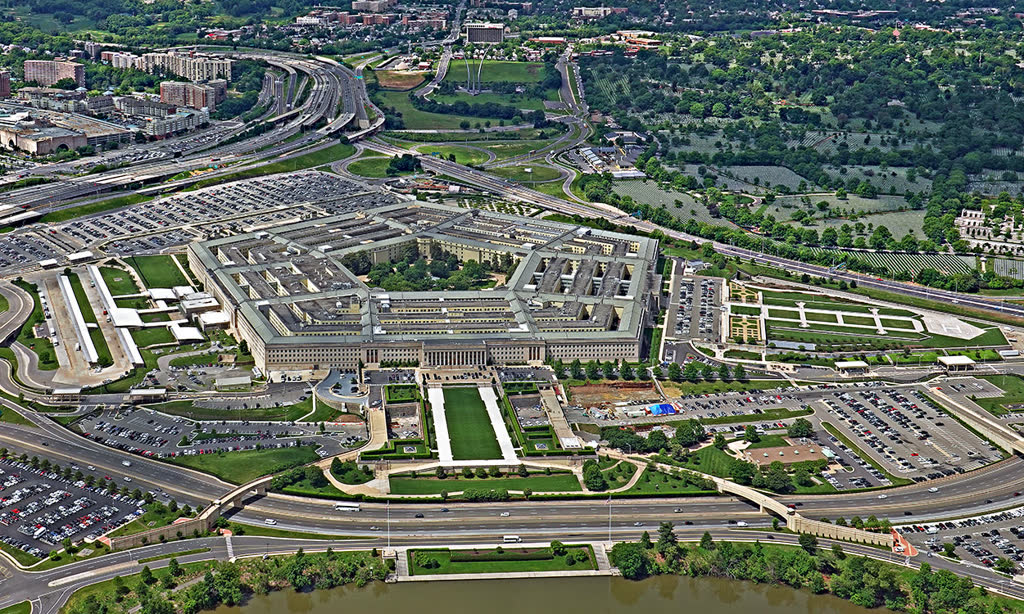
President Donald Trump has approved death by U.S. Army firing squad for Nidal Malik Hasan, the former Army psychiatrist convicted of the 2009 Fort Hood massacre that left 13 people dead and 32 wounded. The Pentagon announced the decision on Monday, nearly 17 years after the worst mass shooting on a U.S. military installation, and the execution would be the first carried out by the American armed forces since 1961.
Chief Pentagon spokesman Sean Parnell said on X that Defense Secretary Pete Hegseth had recommended the method and that Trump approved it, declaring that "judgement day for Hasan has finally come" (Fox News). Hegseth replied to the announcement with a single word: "Justice."
The announcement
According to Parnell's post, the Secretary of the Army will now set the time and place of the execution. The Army has not carried out a death sentence in more than six decades — the last was the hanging of Army Private John Bennett at Fort Leavenworth in 1961 — and the service must now prepare infrastructure and protocols it has not used in generations.
The decision closes a loop that began last year. Hasan's appeals were exhausted in 2025, clearing the way for presidential review of his death sentence, and Hegseth had said publicly that he was committed to seeing the sentence carried out. In February, Army officials circulated a plan, dubbed "Operation Resolute Justice," to coordinate with the Federal Bureau of Prisons to transfer Hasan and the military's three other death-row inmates to a facility in Indiana, according to ABC News.
The 2009 attack and the trial
On November 5, 2009, Hasan — then an Army major and psychiatrist — entered Fort Hood's Soldier Readiness Processing Center in Texas and opened fire on troops standing in line to receive immunizations ahead of deployment. Thirteen people were killed and 32 wounded in the rampage.
A military court convicted Hasan in 2013 of 13 counts of premeditated murder and 32 counts of attempted premeditated murder. He represented himself at trial and offered little defense, and a military jury unanimously sentenced him to death. He has been held ever since at the U.S. Disciplinary Barracks at Fort Leavenworth, Kansas.
A sentence more than a decade in the making
Military death sentences travel a long and layered appellate path, and Hasan's case was no exception:
- December 2020 — the U.S. Army Court of Criminal Appeals upheld the death penalty.
- September 2023 — the Court of Appeals for the Armed Forces upheld it again.
- March 2025 — the U.S. Supreme Court denied Hasan's final petition, confirming the sentence.
With every court having spoken, the Constitution leaves the final step to the president. Hegseth formally sought that approval from Trump in September 2025, and Monday's announcement is the result.
What happens next
The Army has announced neither a date nor a location. Carrying out the sentence will require building procedures from scratch: no one currently serving in the military has administered an execution, and the service must settle everything from the composition of the firing detail to the medical and legal oversight.
Firing squads remain extraordinarily rare in the United States. South Carolina carried out three such executions in 2025 — the first in the country since 2010 — and a broader federal return to firing squads has been under discussion this year. For the military, however, the method is a direct echo of its own past: firing squads were once the standard for military executions.
Victims' families have waited nearly 17 years for the sentence imposed in 2013 to be carried out. Whether the announcement translates into an execution, and how quickly, now rests with the Secretary of the Army — and with a military bureaucracy that has not performed this task since the era of the Vietnam draft.
For context on the administration's broader approach to justice and punishment, see our coverage of the DOJ's denaturalization push and the debate over the death penalty in Algeria, as well as our reporting on the final month of the 2026 midterms.
Frequently Asked Questions
Who is Nidal Hasan?
Nidal Malik Hasan is a former U.S. Army major and psychiatrist convicted of killing 13 people and wounding 32 others in a November 2009 shooting at Fort Hood, Texas. A military court sentenced him to death in 2013, and he has been held on military death row at Fort Leavenworth, Kansas, ever since.
Why a firing squad?
The method was recommended by Defense Secretary Pete Hegseth and approved by President Trump, according to Pentagon spokesman Sean Parnell. Firing squads have a long history as the traditional method of military execution, though the U.S. armed forces have not carried out any execution since 1961.
When will the last U.S. military execution have taken place before this one?
The last execution by the U.S. military was in 1961, when Army Private John Bennett was hanged at Fort Leavenworth, Kansas. If Hasan's sentence is carried out, it would be the first in more than six decades.
Has Hasan exhausted his appeals?
Yes. The Army Court of Criminal Appeals upheld his death sentence in 2020, the Court of Appeals for the Armed Forces did the same in 2023, and the U.S. Supreme Court denied his final petition in March 2025. The president's approval was the final required step.
When and where will the execution take place?
That has not been announced. The Pentagon said the Secretary of the Army will set the time and place. A plan circulated in February, called "Operation Resolute Justice," envisioned transferring Hasan and the military's three other death-row inmates to a federal facility in Indiana.