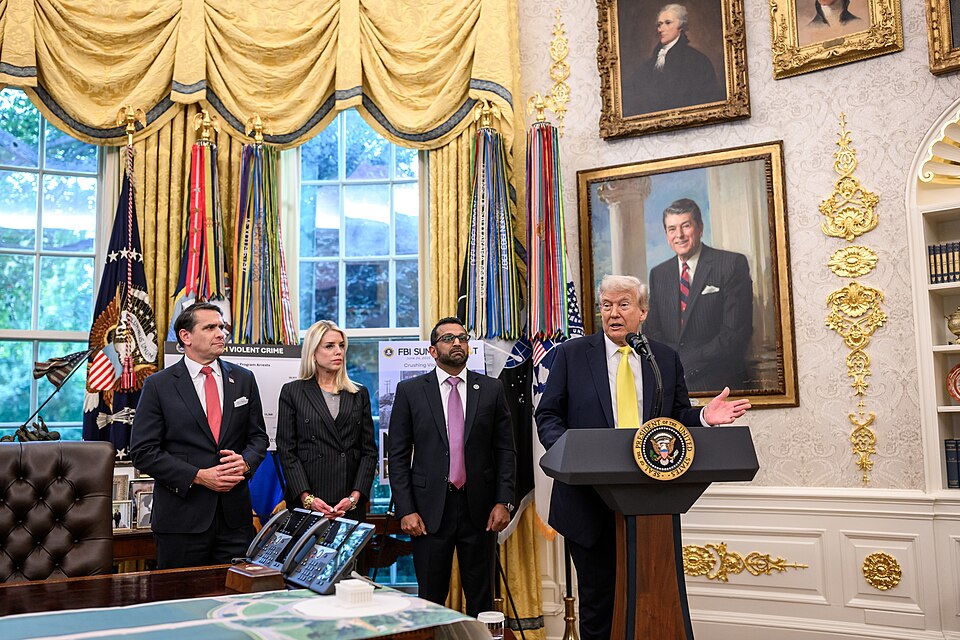
President Donald Trump said on Monday that the United States will help Russia deal with a suspected outbreak of pneumonic plague in Siberia, calling the disease "a rough one" and describing the death of a laboratory worker at a plague research institute as "a big problem for Russia." The offer of American assistance to Moscow comes as Russian authorities quarantine dozens of people who had contact with the deceased woman, while stressing the situation is under control (Reuters).
What happened in Irkutsk
The case centres on the Irkutsk Anti-Plague Research Institute of Siberia and the Far East, where a 28-year-old laboratory worker fell ill and died in undisclosed circumstances, as we reported yesterday. Russian authorities quarantined dozens of her contacts and sent the head of the country's health watchdog to the Irkutsk region.
According to reports from Russian media, including the Irkutsk-based outlet People of Baikal, the dead woman may have contracted pneumonic plague from a broken test tube. Other outlets linked her death to a possible lab accident at the facility. As many as 200 people with whom she may have had contact were placed under observation, the outlet reported.
Russian officials have sought to downplay the alarm. Irkutsk regional governor Igor Kobzev said on Monday that a special expert commission had determined the cause of death was "pneumonia of undetermined aetiology," and that tests found no plague-linked microorganisms in her samples. He added that no new cases among the institute's staff had been reported since her death and that the epidemiological situation in Irkutsk was "stable."
Trump's offer and the US response
Speaking to reporters at the White House on Monday as he left for a pre-midterm campaign rally in Nebraska, Trump was asked what Washington was doing about the risk of the plague reaching Russia's borders — and beyond.
"We're looking at it very strongly," Trump said. "We'll help them, we'll help them as much as we can." He added: "I hate to see them having it. It's a rough disease."
The president struck a cryptic note about the pathogen itself, telling reporters that "the microbes and the germs have gotten stronger" over the years. "That's a disease we used to be able to control, but somehow those microbes have got stronger and smarter, they're like an army," he said, according to the New York Post.
Secretary of State Marco Rubio said separately that Washington was "watching and monitoring" developments closely. "I don't think it's cause for alarm, but it is cause for focus and a cause just to keep an eye on it," Rubio told reporters as he left Washington for a trip to Europe. He added that the State Department had urged Moscow to "share accurate information quickly and openly."
Trump told reporters he had not yet spoken to Russian President Vladimir Putin about the matter — a notable diplomatic footnote, given that Trump has repeatedly said he considers Putin someone he can work with despite tensions over Russia's war in Ukraine.
What the WHO says
The World Health Organization moved to calm the growing public concern, saying that based on available information, "the public health risk to the general population appears to be low." It added that new risk assessments would be conducted once further information became available, as reported by the Straits Times.
Plague is endemic to Siberia — the location of the first known prehistoric human outbreak — because the bacterium that causes it, Yersinia pestis, is present among small wild mammals and their fleas in the region's vast wilderness. Cases are rare in Russia but occur every year in other parts of the world, notably in Africa.
Why it matters
- Pneumonic plague is the most dangerous form. Unlike bubonic plague, the lung infection spreads from human to human through airborne droplets, and if left untreated it can be fatal within one to six days — though it responds well to common antibiotics when caught early.
- Transparency is the open question. The conflicting accounts — Russian officials insisting on "pneumonia of undetermined origin" versus media reports of a lab accident involving a broken test tube — have fuelled speculation, which is precisely why Rubio called for Moscow to share information openly.
- A diplomatic opening, however small. Trump's pledge of assistance is a rare moment of cooperation between Washington and Moscow amid their deep confrontation over Ukraine, and it will be watched closely for any follow-up.
The episode also lands in a busy domestic season for the president, with the midterm elections entering their final stretch and his polling among key voter groups under pressure. But on Monday, at least, the message from the White House lawn was bipartisan in tone: "Anybody that has that kind of a problem, we're always willing to help."
Frequently Asked Questions
What is pneumonic plague?
Pneumonic plague is an infection of the lungs caused by the bacterium Yersinia pestis. It is the most dangerous form of plague because it can spread from person to person through airborne droplets, unlike bubonic plague, which requires a flea bite. It can be fatal within one to six days if untreated, but responds to common antibiotics when identified quickly.
How did the Siberian lab worker die?
A 28-year-old employee of the Irkutsk Anti-Plague Research Institute died after falling ill in undisclosed circumstances. Local media, citing sources close to regional security services, reported she may have contracted pneumonic plague from a broken test tube. Russian officials say postmortem tests found no plague-linked microorganisms and attributed the death to "pneumonia of undetermined aetiology."
What has the US said about the outbreak?
President Trump called it "a big problem for Russia" and offered American help, saying the US is "looking at it very strongly." Secretary of State Marco Rubio said Washington is monitoring the situation closely and urged Moscow to share accurate information openly. The WHO assessed the risk to the general public as low.
Is there a risk the plague could spread internationally?
Russian authorities and the WHO say the situation is under control and the general-population risk appears low. However, pneumonic plague's ability to spread through airborne droplets means health authorities are watching the quarantine measures closely. The dozens of contacts under observation have shown no signs of infection as of early this week.