US consumer inflation came in hotter than expected in September, rising 3.7% year-on-year as the shockwaves of the war with Iran pushed energy costs sharply higher — one of the last major economic reports before voters head to the polls on November 3 (France24).
The reading, published Wednesday by the Department of Labor, exceeded the 3.6% consensus forecast tracked by MarketWatch and marked a notable acceleration from 3.4% in August. On a monthly basis, prices rose 0.6%, up from 0.4% the month before — the fastest monthly clip of the current upswing.
For the Trump administration, the timing could hardly be worse. President Donald Trump has been campaigning across the country to help his Republican party retain control of Congress, with the cost of living consistently ranking as voters' top concern. A hot inflation print three weeks before the election hands Democrats a powerful closing argument.
Table of Contents
- Energy shock at the pump
- Underlying pressures are broadening
- The Fed's October dilemma
- Markets react: bonds spike, stocks fall
- The political stakes
- Frequently Asked Questions
Energy shock at the pump
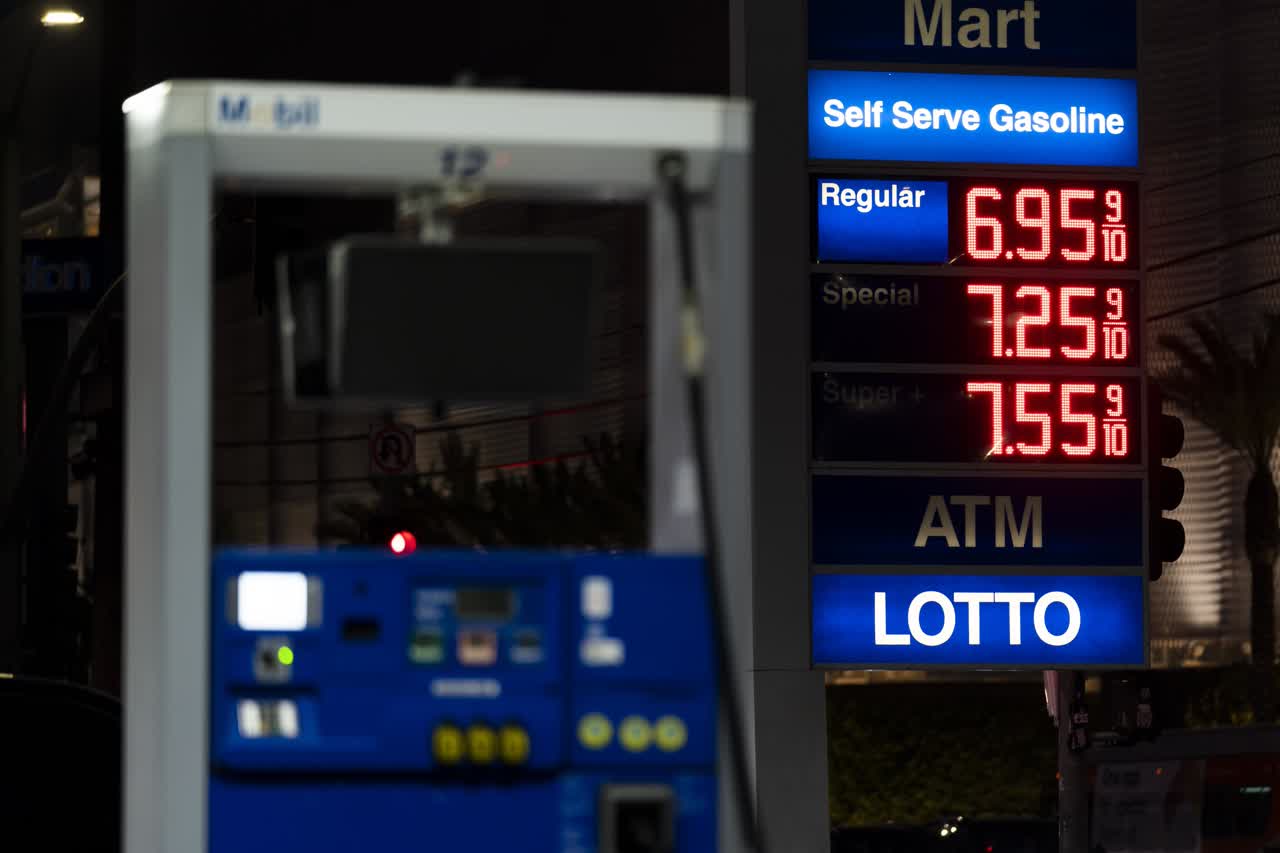
Gasoline alone accounted for more than half of September's inflation jump. Fuel costs surged 9.1% on the month and are now 34.2% higher than a year ago, according to the Bureau of Labor Statistics data cited by the New York Post.
The root cause traces back to the Middle East. Since the United States and Israel struck Iran in late February, Tehran has blocked the Strait of Hormuz, the vital artery for global oil and gas shipments. Chronicle reported earlier that Aramco's chief executive warned it could take two years to rebuild global oil stockpiles under the current squeeze — and consumers are now feeling the pass-through directly.
Motor club AAA data shows the average price at American gasoline pumps has jumped more than 45% since the war began, reaching $4.33 per gallon. Diesel, the lifeblood of freight transport, has surged even more — up 67.7% — raising the cost of moving goods and threatening to spill over into food and retail prices in the months ahead.
"Again, the Iran-US conflict has led to higher motor fuel costs that everyone is experiencing," ING economist James Knightley told AFP, adding that substantial increases in airline fares are likely to add further price pressure.
Underlying pressures are broadening
The hot print was not just an energy story. Core CPI — which strips out volatile food and energy prices to give a clearer read on underlying inflation — also ran hotter than forecast, rising 2.6% year-on-year (against expectations of 2.5%) and 0.3% on the month.
"It's not just gas," as CNN's coverage put it. "It's the car repair, the doctor's visit, the plane ticket, the computer upgrade, the new clothes" (CNN via KION).
The broadening of price pressures is what has economists worried. "The pass-through of higher energy costs into other 'core' items may be occurring more rapidly than previously thought," Stephen Coltman, head of macro at 21shares, wrote in a note after the data.
Heather Long, chief economist at Navy Federal Credit Union, put the household pain in stark terms: "We're in a world now of inflation at 3.7% and wage gains for the typical American at 3%; that's a big gap. The anger about the economy that many Americans feel has justification."
The Fed's October dilemma
The surprise print has thrown the Federal Reserve's next move back into question. The central bank meets on October 27–28, and traders now see a 51.5% chance of a second consecutive 25-basis-point interest rate hike — more than double the roughly 22% odds priced in just a day earlier, according to CME Group's FedWatch tool.
Fed officials themselves appear divided. James Knightley at ING noted that John Williams, Philip Jefferson and Christopher Waller have signalled they do not favour back-to-back increases, preferring instead a "slow and steady" approach. Knightley expects the Fed to be "careful and cautious in terms of its policy tightening."
But the inflation data has strengthened the hawks' hand. A hike was widely expected to wait until December, partly to avoid the appearance of politicising monetary policy during an election campaign. That calculation now looks strained: with headline inflation re-accelerating and core inflation broadening, waiting may prove riskier than acting.
Fed Chair Kevin Warsh has one last public appearance before the policy blackout window — an address at the IMF meeting — which the New York Post notes will be his final opportunity to prepare markets for a possible October move.
Markets react: bonds spike, stocks fall
Investors wasted no time repricing the outlook. Yields on US government bonds spiked after the report: the 10-year Treasury yield, the benchmark that drives mortgage and auto-loan rates, climbed to 5.3% from 5.2% (Aaj English TV). Housing, already strained by elevated borrowing costs, faces fresh pressure.
Equities sold off: the S&P 500 tumbled 1.1% and the Nasdaq dropped 1.9%, while the Dow Jones finished with a small loss, as traders braced for tighter financial conditions.
The bond-market reaction is doubly significant because of the sheer scale of debt flowing through global markets right now. Chronicle reported recently that tech giants including SpaceX, Broadcom and Oracle have been raising record sums in the bond market — a wave of corporate borrowing that competes for the same investor demand as government debt and amplifies the upward pressure on yields.
The political stakes
This is among the final economic data points before the November 3 midterm vote, and both parties will weaponise it. The administration will point to the external shock — a war-driven energy spike rather than domestic mismanagement — while Democrats will argue that households are paying the price of the president's Middle East strategy and that wages are not keeping up.
Retail sales data for September, released the same day, showed consumer spending up a better-than-expected 0.8% — shoppers are still spending, but they are stretching thinner to do it. With core inflation broadening, diesel surging and borrowing costs climbing, the resilience of the American consumer is the central question of the final weeks of the campaign.
Frequently Asked Questions
What was the US inflation rate in September 2026?
The Consumer Price Index rose 3.7% year-on-year in September 2026, according to the Department of Labor — above the 3.6% economists expected and up from 3.4% in August. Month-on-month inflation was 0.6%, versus 0.4% in August.
Why did inflation rise in September?
Rising energy costs were the main driver, largely due to the US–Israel war with Iran, which prompted Tehran to block the Strait of Hormuz. Gasoline prices jumped 9.1% in the month and accounted for more than half of the overall increase. But core inflation — excluding food and energy — also ran hot at 2.6%, signalling broader price pressures.
Will the Federal Reserve raise interest rates in October?
Analysts are divided. After the hot CPI print, traders see a 51.5% chance of a 25-basis-point hike at the October 27–28 meeting — up from about 22% a day earlier. Some Fed officials favour a "slow and steady" approach with no back-to-back hikes, while the data strengthens the case for action.
How does this affect the November midterm elections?
Inflation was already voters' top concern, and a worse-than-expected print three weeks before the November 3 vote is a political headwind for Republicans. The Trump administration blames the external energy shock of the Iran war; Democrats argue households are bearing the cost of the president's Middle East policy and wage gains are not keeping up.