Judges at the International Court of Justice have taken advice on how to protect their assets from potential United States sanctions, as the world's top court prepares to deliver a landmark judgment on Thursday on whether Myanmar committed genocide against its Rohingya minority. The warning, reported by The Guardian, places the court — and one of its most prominent judges, this year's Nobel Peace Prize winner Navi Pillay — directly in the path of Washington's campaign against international tribunals.
The judgment, in the case brought by The Gambia under the 1948 Genocide Convention, is scheduled for Thursday morning in The Hague. It will be the first time in the court's eighty-year history that it has been asked to decide whether a state is responsible for genocide. A ruling against Myanmar would be one of the most significant moments in international law since the end of the Second World War — and, according to the report, it is precisely that gravity that has drawn the threat of American retaliation.
A court under pressure
The fear is not abstract. The United States has already imposed sanctions on judges of the International Criminal Court after that tribunal issued arrest warrants for Israeli Prime Minister Benjamin Netanyahu. Nine ICC judges have been targeted in that campaign, and the Trump administration has made little secret of its willingness to use the same weapon against the ICJ.
America's ambassador to the United Nations, Mike Waltz, has warned that Washington "will not allow globalist, faux judges to weaponize the law against our troops" — language that judges in The Hague are reading as a direct threat. Waltz has also cautioned the court against lowering the legal threshold for proving genocide, arguing that a weaker standard could later be used against American and allied soldiers.
That warning matters because of what is at stake in the legal reasoning. The ICJ has set a deliberately high bar for inferring genocidal intent from a pattern of conduct, established in its two earlier genocide judgments — Bosnia v. Serbia and Croatia v. Serbia, neither of which found a state guilty. How the court treats intent in the Myanmar case will shape not only this verdict but also South Africa's pending genocide case against Israel, and potentially claims against the United States and its NATO allies.
What sanctions would actually mean
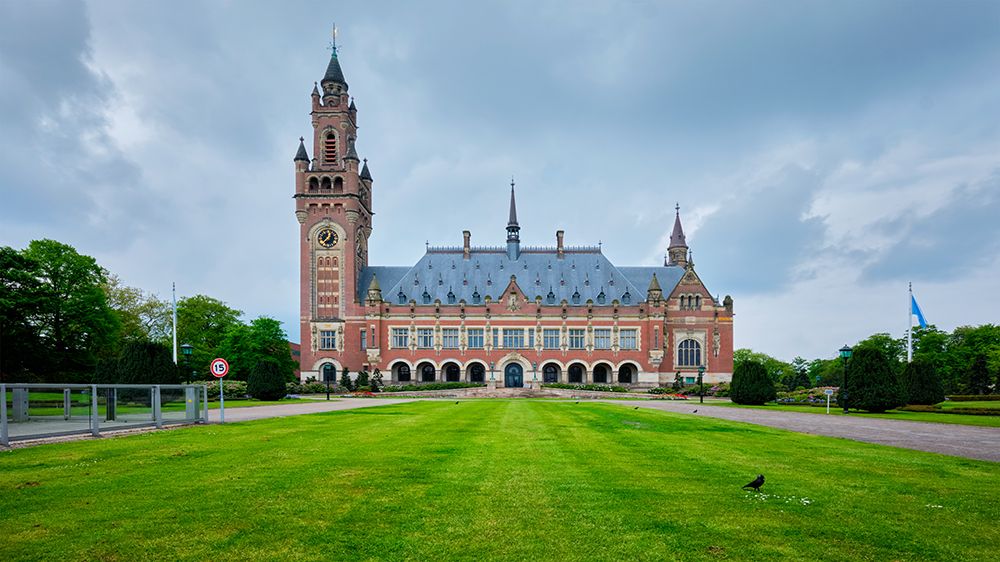
What much of the coverage so far has left vague is the practical effect of sanctions on sitting international judges. In the ICC precedent, targeted judges faced asset freezes, travel bans and the severing of banking relationships — measures that can make ordinary life, from holding a bank account to travelling for court business, extraordinarily difficult. That judges at the ICJ are now seeking advice on shielding their assets before the judgment is even delivered shows how seriously the threat is being taken inside the Peace Palace.
The irony is sharp. The United States itself formally considers the Rohingya crisis to be a genocide: the Biden administration made that determination in 2022. Yet the current administration's concern is not with the facts on the ground in Rakhine state, but with the legal standard the court might set — and with the precedent a guilty verdict would create for the case against Israel, America's closest ally in the region.
Seven years of waiting
For the Rohingya, the judgment is the culmination of nearly a decade of waiting. Myanmar's military drove more than 700,000 Rohingya across the border into Bangladesh during its 2017 campaign in Rakhine state, in what survivors and investigators have described as a systematic operation of killing, rape and village-burning. The Gambia, a small Muslim-majority West African state, filed the case in 2019, and the court ordered provisional measures in January 2020 requiring Myanmar to prevent genocide and preserve evidence.
The human stakes have often been crowded out of the coverage by the legal and diplomatic manoeuvring. Around a million Rohingya remain in camps in Bangladesh, with no realistic prospect of safe return while Myanmar's military government remains in power and while Rakhine state continues to see fighting. Supporters of the case say a guilty verdict should compel states to block arms transfers and jet-fuel supplies to Myanmar's military — though the court has no enforcement mechanism of its own, and its orders have depended on states choosing to comply.
Navi Pillay's presence on the bench adds a further dimension. The South African jurist, who won this year's Nobel Peace Prize for her work advancing international law, has been singled out by name in American warnings about the case. We profiled her Nobel win here — and the fact that a Nobel laureate now faces the prospect of sanctions for sitting in judgment is itself a measure of how far the confrontation between Washington and the international courts has gone.
The precedent beyond Myanmar
Whatever the court decides on Thursday, the ruling will echo far beyond Rakhine state. A guilty verdict would be the first state conviction for genocide in the ICJ's history, and it would immediately become the reference point for South Africa's case against Israel over Gaza — a case Washington has opposed from the start. An acquittal, by contrast, would be read by critics of international justice as proof that the genocide convention cannot be enforced against a state at all.
The court's judges know this. They also know that the United States has already shown it will punish judges whose rulings it dislikes. The question now is whether the threat of sanctions will hang over the deliberations in The Hague — or whether the court will deliver its judgment as if the threats did not exist. The Rohingya, who have waited seven years for this moment, will be watching.
For background on how the case reached this point, see our earlier coverage of the expected verdict and the continuing violence in Rakhine state.
Frequently Asked Questions
When will the ICJ deliver its judgment on Myanmar?
On Thursday morning, 19 November 2026, in The Hague. The case, brought by The Gambia in 2019, accuses Myanmar of violating the 1948 Genocide Convention in its treatment of the Rohingya.
Why are US sanctions being discussed before the ruling?
The Guardian reported that ICJ judges, including Nobel Peace Prize winner Navi Pillay, have taken advice on protecting their assets from potential US sanctions if the court finds Myanmar guilty. Washington has already sanctioned ICC judges over arrest warrants for Israel's prime minister, and US ambassador Mike Waltz has warned the court not to lower the legal threshold for proving genocide.
Has the ICJ ever found a state guilty of genocide?
No. In its eighty-year history the court has never held a state responsible for genocide. Its two previous genocide judgments — Bosnia v. Serbia and Croatia v. Serbia — did not find a state guilty.
What would a guilty verdict mean in practice?
The court has no enforcement mechanism, but supporters say a guilty verdict should compel states to block arms transfers and jet-fuel supplies to Myanmar's military. It would also set a precedent for South Africa's pending genocide case against Israel.
How many Rohingya were displaced?
More than 700,000 fled to Bangladesh during Myanmar's 2017 military campaign in Rakhine state. Around a million Rohingya remain in camps in Bangladesh with no prospect of safe return.