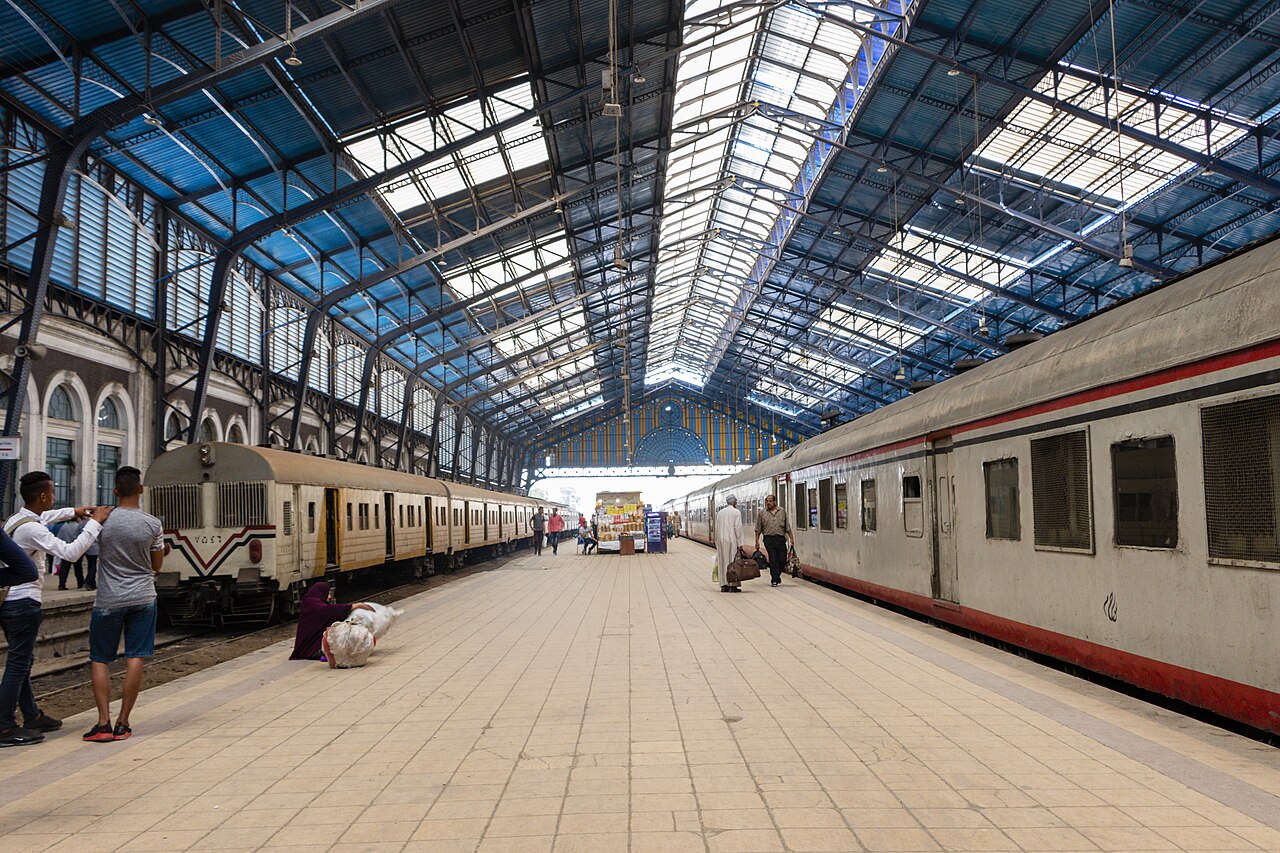
At least seven people were killed and more than 100 injured on Sunday when a passenger train slammed into the rear of a stationary train in al-Ayyat district, in Giza province about 30 miles (48 kilometres) south of Cairo, officials said. The collision, which derailed one of the trains, is the latest deadly accident on a railway network that has long struggled with safety.
The crash happened when a train travelling towards Fayoum province struck the back of a train bound for the southern city of Aswan, according to Egypt's transport ministry. An initial inspection indicated that the Cairo–Aswan train had been stationary on the same track when it was hit.
Table of Contents
- What happened in al-Ayyat
- Rescue effort and the official response
- A familiar pattern on Egypt's railways
- What happens next
- Key takeaways
- Frequently Asked Questions
- Sources
- Chronicle further reading
What happened in al-Ayyat
The collision took place on Sunday in al-Ayyat, a district in Giza province south of the capital. The Guardian reported that seven people were killed and more than 100 injured, citing officials, while a local resident said he saw about 80 of the injured being taken by ambulance to hospital.
Ayman Gamal, a resident of Kafr Girza in al-Ayyat, told reporters that people rushed to the scene, pulled survivors from the wreckage and called for ambulances. Some passengers trapped inside a carriage of the stationary train died, he said.
One of the trains derailed in the impact. The transport ministry said the Fayoum-bound train had crashed into the rear of the Aswan-bound service, which was standing on the same track. It was not immediately clear why the two trains were on the same line, or whether signalling or human error played a role — questions the investigation will now have to answer.
Rescue effort and the official response
Egypt's railway authority said emergency teams and cranes were dispatched to clear the wreckage and to restore train services to their normal schedule as soon as possible. Ambulances ferried the injured to nearby hospitals, with residents among the first on the scene.
President Abdel Fatah al-Sisi said in a social media post that he had ordered a prompt investigation into the crash. The speed of that order reflects the political sensitivity of rail accidents in Egypt, where each new disaster renews public anger over a system that millions of people depend on every day.
The casualty figures may still change. With more than 100 people injured, hospitals in Giza province were treating a large number of casualties on Sunday evening, and officials had not yet published a full list of the dead.
A familiar pattern on Egypt's railways
Train derailments and crashes are common in Egypt, where the railway system has a history of mismanagement and poor maintenance of equipment. In recent years the government has announced modernisation initiatives aimed at improving the network, but accidents have continued.
The al-Ayyat district itself has seen trouble before. Last September, a train driver and his assistant were injured after two freight trains collided in the same district — a warning sign that went unheeded, at least in the sense that no lasting fix prevented Sunday's passenger disaster.
Egypt's deadliest train crash came in 2002, when a fire broke out on an overnight train travelling from Cairo to southern Egypt, killing more than 300 people. That disaster, and the string of smaller accidents since, has made rail safety one of the most persistent public grievances in the country.
The pattern is familiar beyond Egypt, too. Spain suffered a deadly high-speed train collision near Toledo last month, a reminder that even modern networks are not immune to catastrophic failure when signalling, scheduling or maintenance goes wrong. Chronicle covered that crash and its aftermath in October.
For Egypt, the deeper problem is structural. The network is one of the oldest and busiest in the region, carrying tens of millions of passengers a year on infrastructure that in places dates back decades. Successive governments have promised upgrades — new rolling stock, modern signalling, better training — but implementation has been uneven, and the accidents keep coming.
What happens next
The investigation ordered by President al-Sisi will examine why the Fayoum-bound train was routed onto a track occupied by a stationary service, and whether the signalling system, the drivers, or the dispatchers were at fault. Prosecutors in Egypt routinely open criminal inquiries after fatal rail accidents, and those responsible can face charges.
In the short term, services through al-Ayyat will remain disrupted while cranes clear the wreckage and engineers check the track. The railway authority has said it aims to restore the normal timetable as soon as possible, but the line is a key artery between Cairo and the south, and any prolonged closure will ripple across the network.
For the families of the dead and the more than 100 injured, the questions are more immediate: who will be held responsible, and whether this time the promises of reform will amount to more than words. Egypt has heard those promises after every previous disaster. Sunday's crash in al-Ayyat is the latest test of whether they will be kept.
Key takeaways
- At least seven people were killed and more than 100 injured when two trains collided in al-Ayyat district, Giza province, about 30 miles south of Cairo, on Sunday 8 November 2026.
- A train travelling to Fayoum province crashed into the rear of a stationary train heading to Aswan; one train derailed.
- President Abdel Fatah al-Sisi ordered a prompt investigation; emergency teams and cranes were sent to clear the wreckage.
- Train crashes are common in Egypt, where the railway has a history of mismanagement and poor maintenance; the same district saw a freight-train collision last September.
- Egypt's deadliest train crash was in 2002, when a fire on an overnight train from Cairo killed more than 300 people.
Frequently Asked Questions
How many people were killed in the Egypt train collision?
At least seven people were killed and more than 100 injured, according to officials cited by The Guardian. A local resident said he saw about 80 of the injured being taken by ambulance to hospital.
Where did the crash happen?
The collision happened in al-Ayyat district in Giza province, about 30 miles (48 kilometres) south of Cairo. A train travelling to Fayoum province crashed into the rear of a train heading to the southern province of Aswan, which was stationary on the same track.
What caused the collision?
The exact cause is not yet known. The transport ministry said the Fayoum-bound train struck the rear of the stationary Aswan-bound train. President Abdel Fatah al-Sisi has ordered a prompt investigation, which will examine signalling, scheduling and possible human error.
Is this the first train accident in the area?
No. Last September, a train driver and his assistant were injured after two freight trains collided in the same district of al-Ayyat. Train derailments and crashes are common across Egypt, where the railway system has a history of mismanagement and poor maintenance.
What is Egypt's worst train disaster?
Egypt's deadliest train crash was in 2002, when more than 300 people were killed after a fire broke out on an overnight train travelling from Cairo to southern Egypt.