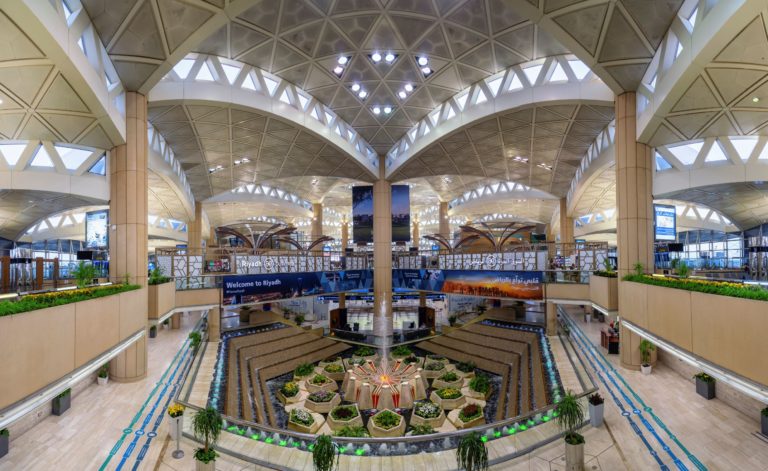
Yemen's Houthi rebels are widening their campaign against Saudi Arabia beyond Riyadh. A day after a missile strike on King Khalid International Airport killed 13 people and wounded more than 300 — the deadliest attack on Saudi soil in more than a decade — the group on Sunday claimed it had also struck Dammam's airport in the kingdom's Eastern Province and two facilities belonging to the oil giant Aramco.
The claims, made in a televised address by Houthi military spokesman Yahya Saree, mark a dangerous escalation in a conflict that has already paralysed air traffic across the Arabian Peninsula. Saudi Arabia's civil aviation authority confirmed that Dammam's King Fahd International Airport was targeted on Sunday, shortly after the Houthis said they had attacked it.
Sunday's strikes: what happened
Saudi authorities reported a fresh projectile hit at Riyadh's Terminal 4 on Sunday — a day after Saturday's devastating blast — killing one person, a Pakistani resident, and injuring 11 others, according to the Saudi civil aviation authority. The Saudi-led coalition said air defences had intercepted a cruise missile near King Khalid International Airport, destroyed a drone in the Eastern Province, and intercepted a ballistic missile headed for Khamis Mushait. Emergency alerts were also issued in Abha in the kingdom's south early on Monday, though officials later said the danger had passed.
Saree's address claimed responsibility for Saturday's Riyadh attack and announced the new targets: Dammam airport — one of the busiest in the Gulf — and two Aramco facilities. A previous Houthi claim earlier this year already asserted a strike on an Aramco refinery near Riyadh. The coalition has previously vowed "deadly" retaliation, and Saudi media reported retaliatory strikes on the Houthi-controlled Sanaa governorate on Sunday.
Saturday's attack had already forced the closure of King Khalid International Airport, with Saudi Arabia extending the shutdown through October 17. Footage from the Saturday blast showed pilgrims queued at a gate when an orange flash sent crowds fleeing and sections of the roof caving in.
Airlines reroute, skies declared unsafe
The aviation fallout is spreading faster than the missiles. Airlines have diverted dozens of aircraft and cancelled more than 1,000 flights, according to industry data. With usable routes already narrowed by the wars in Ukraine and Iran, carriers shuttling between Europe and Asia are now detouring over Central Asia — longer, costlier, and not entirely safe routes of their own, ChosunBiz reported.
Governments are acting too. The United States, Britain and Australia have advised their citizens to avoid Riyadh airport; France and Germany warned their airlines that transiting Saudi airspace is dangerous. Opsgroup, the independent aviation-safety organisation, said the Houthis had made clear in word and deed that they intend to target civil aviation, and urged airlines to avoid Saudi airspace entirely — echoing the rebels' own threat that Saudi airports and airspace, except for the holy cities of Mecca and Medina, are a "theatre of operations," as the group warned earlier this month in its warning to avoid Saudi airports.
Trump weighs joining the Saudi campaign
The crisis is pulling Washington closer to direct involvement. President Donald Trump said on Sunday he was considering joining Saudi strikes against the Houthis after the Riyadh attack, which killed a US citizen. "We may. We're going to look at it. We just found out about the recent attack, so we'll make a decision," he told reporters.
The remarks follow a week of intensified Houthi attacks on the Saudi capital's airport — three people were also killed in a strike on Thursday — and come as the Houthis, who seized swathes of Red Sea coastline in a lightning offensive last month, press a ground war against the Saudi-backed Yemeni government.
The United Nations condemned the attack, and the Saudi-led coalition has called Saturday's strike a "full-fledged war crime."
Why this matters now
Two shifts make this escalation different. First, the targeting of Dammam — on the Gulf coast, closer to Bahrain and the shipping lanes that matter to global energy markets — suggests the Houthis are deliberately expanding the geography of risk, not just repeating the Riyadh strikes. Second, the pairing of airport and Aramco claims revives memories of the 2019 Abqaiq attacks, which briefly knocked out half of Saudi oil output. Even unverified claims move insurance premiums and fuel prices.
Whether the Aramco claims are confirmed or not, the pattern is clear: after a week of strikes, Saudi Arabia's air defences have been penetrated repeatedly, and the kingdom's adversaries are advertising that they intend to keep doing it.
Frequently Asked Questions
What did the Houthis claim on Sunday?
Military spokesman Yahya Saree said in a televised speech that the group had claimed Saturday's deadly Riyadh airport attack, and had also targeted Dammam's King Fahd International Airport and two facilities belonging to Saudi oil giant Aramco.
How many people were killed in the attacks?
Saturday's missile strike on Riyadh's King Khalid International Airport killed 13 people and wounded more than 300. Sunday's follow-up strike on Terminal 4 killed one person — a Pakistani resident — and injured 11 others.
Are flights to Saudi Arabia operating?
King Khalid International Airport remains closed, with the closure extended to October 17. Airlines have cancelled more than 1,000 flights, and aviation authorities in several countries advise avoiding Saudi airspace.
Is the United States getting involved?
President Trump said he was considering joining Saudi strikes against the Houthis, telling reporters: "We may. We're going to look at it." A US citizen was among those killed in Saturday's attack.