Iraqi Prime Minister Ali al-Zaidi dismissed nine senior officials on Saturday 14 November 2026 after an investigation confirmed an oil smuggling network worth up to $30 million a month operating from Jurf al-Sakhar, a town in Babil province controlled by the Iran-backed Kataib Hezbollah militia. Al Jazeera
The dismissals mark the sharpest move yet in a confrontation between Baghdad and one of Iraq's most powerful armed factions, and a direct test of whether the prime minister can impose state authority over territory the militia has controlled for more than a decade.
Nine officials dismissed, suspects referred to court
Announcing the decision, the prime minister's military spokesman, Sabah al-Numan, said that "in light of the investigation's findings", al-Zaidi had ordered everyone accused of involvement in the smuggling to be referred to the judiciary, without naming the suspects. The nine dismissed officials include security and intelligence officers in Babil province, an interior ministry commander and the director of the Oil Pipelines Company at the oil ministry, according to Arab News.
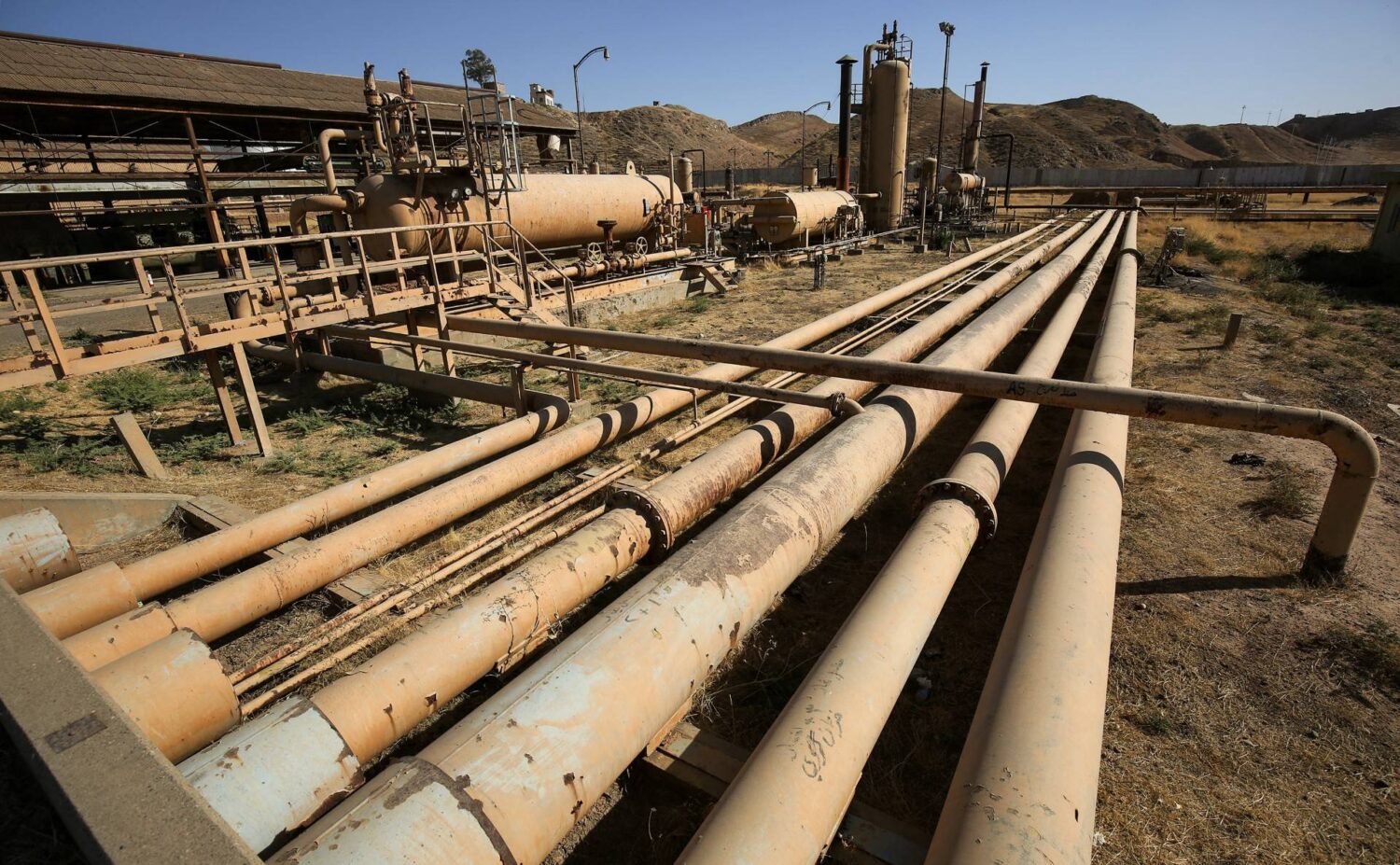
The scale of the alleged operation is striking. A classified interior ministry assessment, first reported by the US-funded outlet Alhurra, described a network that has been siphoning oil from federal pipelines since 2021. Investigators who tracked five years of satellite imagery identified four sites where oil drawn from breached pipelines was passed through makeshift refineries and stored in underground pits, before being hauled away in tanker trucks carrying 36,000 litres each along three routes toward Baghdad and the international highways, passing through official checkpoints.
A committee escorted by troops into the militia's heartland
Al-Zaidi formed an 11-member investigative committee on Thursday, placing it under the Popular Mobilization Forces, the state-sanctioned umbrella of mostly Shia armed groups formed in 2014 to fight the Islamic State group. On Friday, a large military force escorting the committee reached the entrance to Jurf al-Sakhar, its first field deployment in the inquiry, and waited for reinforcements before entering the town. Committee members later met commanders believed to belong to Kataib Hezbollah, 964media reported.
State media said intelligence documents containing satellite images showed crude oil and oil-derivatives smuggling carried out by an armed faction in the area, accusing the unnamed faction of tapping a pipeline. According to the prime minister's spokesman, the committee "confirmed the accuracy" of that information.
The political pressure around the case has already spread beyond the security services. Parliament Speaker Haibat al-Halbousi ordered a separate parliamentary inquiry on 11 November, after the classified assessment became public. And Babil's governor, Ali Turki, resigned a day before the committee's deployment, reportedly under pressure from Qais al-Khazali, leader of the Iran-aligned Asaib Ahl al-Haq faction — an account that could not be independently verified.
A town closed off since 2014
Jurf al-Sakhar — officially renamed Jurf al-Nasr after Iraqi forces and allied armed groups recaptured it from the Islamic State group in 2014 — sits about 60 kilometres southwest of Baghdad in a strategically important corridor. It has since become Kataib Hezbollah's main stronghold: research by the Combating Terrorism Center at West Point identified the area as a major hub for the group, with facilities linked to weapons manufacturing, storage and testing.
The town has remained under tight security restrictions since 2014, and many of its displaced residents still cannot return home. Kataib Hezbollah, which operates brigades within the Popular Mobilization Forces, was designated a terrorist organisation by the United States in 2009, and Washington has repeatedly accused Iraqi armed groups of involvement in oil smuggling.
Not everyone in Baghdad accepts the official account. Saad Maan, head of the Security Media Cell, has denied that the militias were involved, and local officials have offered an alternative explanation for the site, describing it as an old fuel station used for years to refuel federal police and militia vehicles. Neither the government committee nor the parliamentary inquiry has announced formal findings.
A test of state authority
The confrontation comes at a delicate moment for al-Zaidi, who came to power with American backing and has pledged to bring weapons under state control. His government has already set a June 2027 deadline for militia disarmament, a plan that Kataib Hezbollah and other factions have resisted. For more on that timetable, read Iraq sets June 2027 deadline for militia disarmament, and on the formation of al-Zaidi's government, read Iraq parliament completes Zaidi cabinet.
Whether the dismissals lead to prosecutions — and whether the committee can work freely inside Jurf al-Sakhar — will show how far the prime minister is willing, and able, to go. A smuggling network worth hundreds of millions of dollars a year, running through checkpoints in the heart of a militia stronghold, is not only a corruption case. It is a measure of who really governs Iraq's oil-rich south.
Frequently Asked Questions
What did Iraq's prime minister announce on 14 November 2026?
Prime Minister Ali al-Zaidi dismissed nine senior security and oil officials, including the director of the Oil Pipelines Company, and ordered all suspects in an alleged oil smuggling network in Jurf al-Sakhar to be referred to the judiciary.
How large is the alleged smuggling network?
The network is alleged to be worth up to $30 million a month. A classified interior ministry assessment said oil has been tapped from federal pipelines since 2021 and moved in 36,000-litre tanker trucks through makeshift refineries and underground storage pits.
Where is Jurf al-Sakhar and why does it matter?
Jurf al-Sakhar, also known as Jurf al-Nasr, is a town in Babil province about 60 kilometres southwest of Baghdad. It has been a stronghold of the Iran-backed Kataib Hezbollah militia since it was recaptured from the Islamic State group in 2014, and many of its displaced residents still cannot return.
Has anyone been charged?
No suspects have been publicly named. The prime minister's office said those accused of involvement would be referred to the judiciary, while the investigating committee and a separate parliamentary inquiry have yet to announce formal findings.