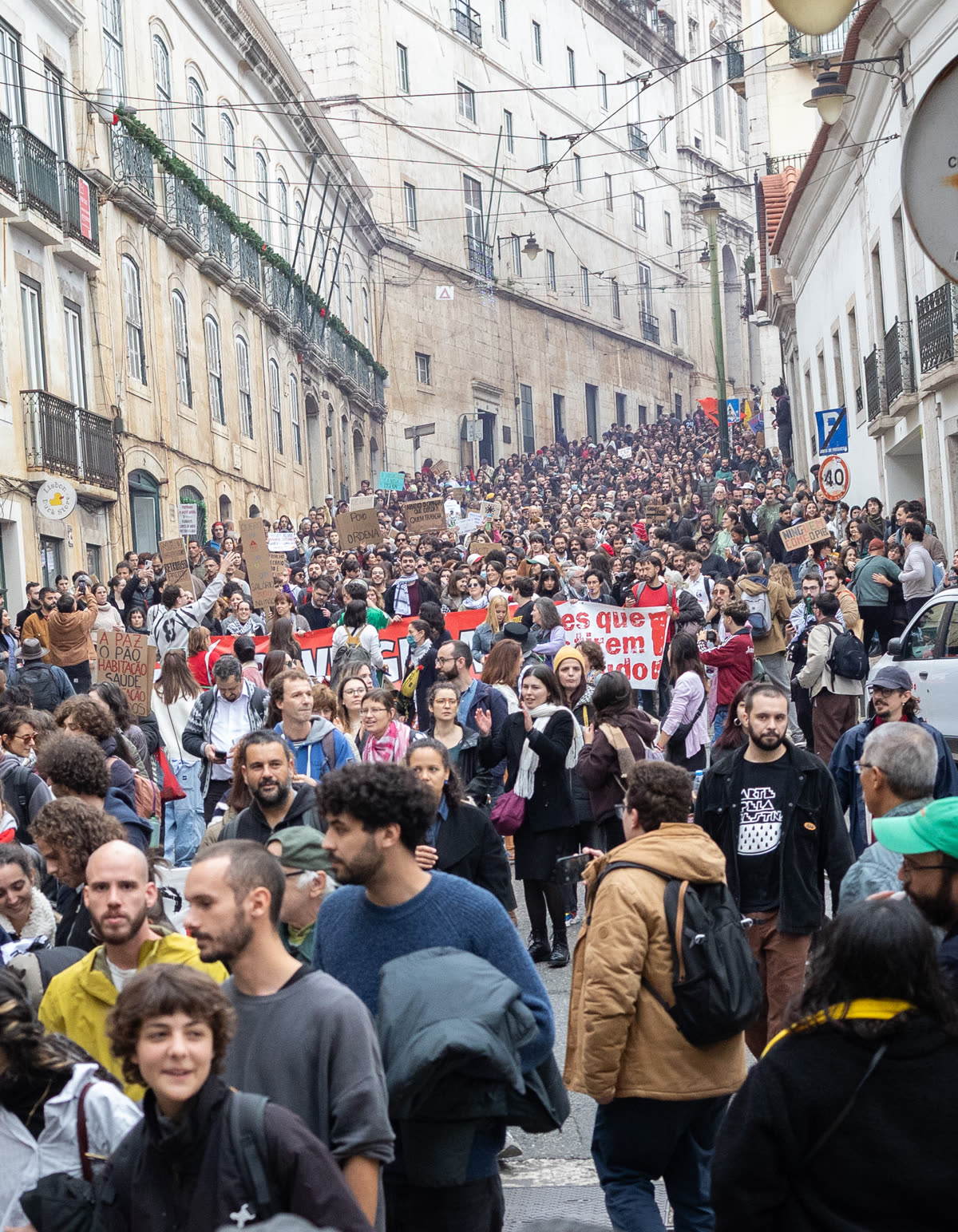
Tens of thousands of people marched through more than 30 towns and cities across Portugal on Saturday 14 November 2026, in the largest national demonstration yet against soaring rents and a deepening housing shortage, demanding urgent government action to put homes back within reach of ordinary workers (Al Jazeera).
The marches, organised by the Casa Para Viver (A Home to Live In) platform under the slogan "They will not steal our right to a home", filled streets in Lisbon, Porto, Faro, Portimão, Coimbra, Braga and Setúbal, among other locations. Organisers say it was the biggest national demonstration since the movement began several weeks ago, with some activists already camping in central squares in Lisbon and Porto to keep the pressure on.
What the protesters are demanding
The platform, which brings together around 100 housing associations and grassroots organisations, is calling for caps on rent increases, stronger protection for tenants against eviction, more public and affordable housing, and tighter regulation of rental contracts, short-term tourist accommodation and vacant properties.
"We need homes to live in, not homes to speculate on," Raquel Ferreira of Casa Para Viver told demonstrators in Porto, capturing a sentiment echoed on banners across the country. Rita Silva, a spokeswoman for the platform, told the Lusa news agency that the turnout showed the crisis was hitting the whole country, not only the big cities.
The immediate trigger for Saturday's mobilisation was parliament's approval of government-backed changes that give landlords greater flexibility in rental contracts and speed up eviction procedures. José Manuel Pureza, coordinator of the Left Bloc, called for the draft legislation to be withdrawn, saying that was what the large-scale mobilisation nationwide was demanding.
A decade of prices outpacing pay
The scale of the crisis is visible in the official figures. Between 2015 and 2025, Portugal recorded the largest rise in the European Union in the ratio of house prices to incomes — an increase of 60.8 percent, according to Eurostat, well ahead of the Netherlands in second place at 34.3 percent. House prices rose by almost 20 percent between the first quarter of 2025 and the first quarter of 2026, the National Statistics Institute said at the end of October, while the government says rents have climbed 68 percent since 2020.
The steepest increases have been recorded in Lisbon and Porto, where tourism growth, short-term lets and foreign investment have pushed housing costs far beyond local wages. One analysis cited during the protests found that the average Lisbon resident is left with only €253 of disposable income a month after paying rent.
The government's answer so far
Prime Minister Luís Montenegro's government has cut taxes on new construction, restricted short-term rentals and promised to build 145,000 homes, but has said the effects will not be immediate — an answer protesters say is too slow for families already being priced out.
President António José Seguro, whose role is mostly ceremonial but who wields political influence, convened a Council of State, an advisory body, to discuss the protests earlier this month and met some of the protesters on Friday.
The movement shows no sign of stopping. Casa Para Viver has already announced another nationwide demonstration for 12 December 2026, and the protests have drawn inspiration from similar marches in neighbouring Spain last month, where housing costs have fuelled the same anger.
Why this matters beyond Portugal
Portugal's housing squeeze mirrors a pattern across southern Europe: tourism and investment have lifted property values while wages have stagnated, turning a basic need into a political fault line. Saturday's turnout — the movement's largest yet — suggests the issue has moved from the margins to the centre of Portuguese politics, and the government now faces a choice between accelerating its housing plans or facing a movement that is organising, growing and already planning its next march.
Frequently Asked Questions
How many people protested across Portugal on 14 November?
Tens of thousands of people marched in more than 30 towns and cities, including Lisbon, Porto, Faro, Portimão, Coimbra, Braga and Setúbal. Organisers described it as the biggest national housing demonstration since the movement began several weeks ago.
What are the protesters demanding?
Rent caps, stronger protection for tenants against eviction, more public and affordable housing, and tighter regulation of rental contracts, short-term tourist accommodation and vacant properties.
What triggered Saturday's protests?
Parliament approved government-backed changes that give landlords greater flexibility in rental contracts and accelerate eviction procedures. Protesters and opposition parties are calling for the legislation to be withdrawn.
How bad is Portugal's housing crisis?
Portugal recorded the largest rise in the EU in the home price-to-income ratio between 2015 and 2025 — up 60.8 percent, according to Eurostat. House prices rose almost 20 percent in the year to the first quarter of 2026, and rents have climbed 68 percent since 2020.
What has the government promised?
Prime Minister Luís Montenegro's government has cut taxes on new construction, restricted short-term rentals and promised to build 145,000 homes, but says the effects will not be immediate. Another nationwide demonstration is planned for 12 December 2026.
Read more
- Lisbon housing camp cleared: Police clear Lisbon housing protest camp
- The same anger across the border: Spain housing protests in October
- Madrid's housing politics: Spain housing bills defeated as Sánchez faces pressure