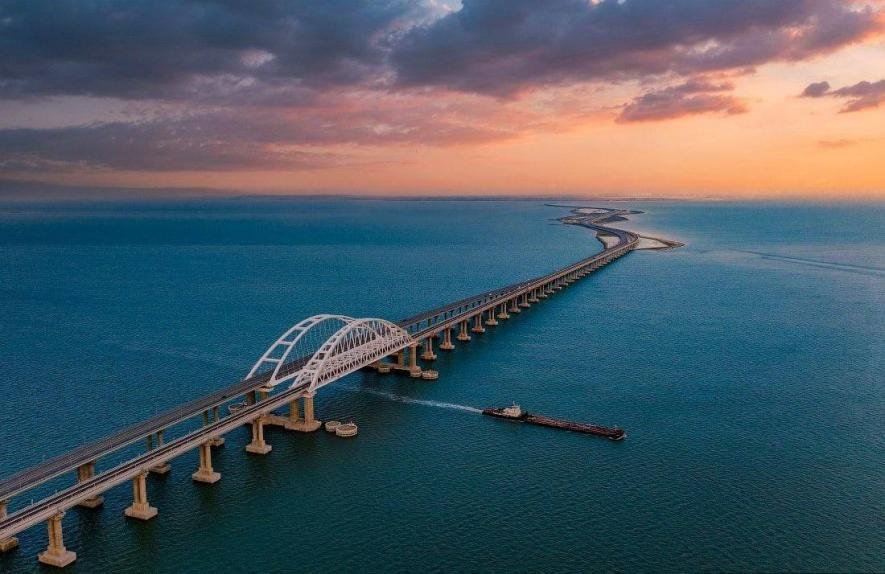
Ukrainian drones and missiles destroyed the central road section of the bridge linking Russia to occupied Crimea on Tuesday, November 17, the second strike on the crossing in as many days, while Russia answered overnight by hitting two of Kyiv's main bridges with ballistic missiles — a dramatic exchange of blows over infrastructure just two days before the leaders of China, the United States and Russia are due to meet in Shenzhen. (The Hindu)
What happened at the Kerch Bridge?
Ukrainian President Volodymyr Zelenskyy confirmed the attack on Tuesday, calling it retaliation for Russian strikes on Ukrainian infrastructure, including bridges. Ukraine's General Staff said an arch and a span of the bridge's road section had collapsed, severing the road link, while the railway section was still standing but its arch was damaged.
Video and images posted on social media by Zelenskyy and verified by Reuters appeared to show the bridge's main road arch crumbled into the Kerch Strait below, leaving a yawning gap after two strikes in as many days. Traffic across the 19-kilometre (12-mile) road and rail bridge was suspended, and Sergei Aksyonov, Crimea's Russian-installed governor, said two people were killed. Train travel resumed on Tuesday after a brief pause.
Russia's Investigative Committee confirmed the bridge had been attacked by drones and sustained damage, but gave no details. The Kremlin said the first attack this week caused only minor damage, and there was no official Russian confirmation of the full extent of the destruction.
A seven-stage operation
Zelenskyy described the strike as the culmination of weeks of preparatory work carried out in seven stages, in which Ukrainian forces methodically wore down Russian air defences, radar systems and electronic-warfare capabilities around the crossing before missiles delivered the final blow. It was, he said, a "masterstroke" — the product of a patient campaign rather than a single night's raid.
The overnight attack was part of what Russian state news agencies called the largest Ukrainian drone attack on Russia since the full-scale war began in 2022. Russia's Defence Ministry said it shot down 1,441 drones over 22 regions, surpassing the previous record of 1,336 set the day before. Moscow Mayor Sergei Sobyanin reported that more than 800 of them were headed for the capital itself, with attacks reported across 19 regions.
Kyiv's bridges hit in reply
Hours later, Russia struck back at the Ukrainian capital. Seven ballistic missiles hit Kyiv's Northern and Southern bridges — the Pivnichnyi and Pivdennyi crossings, two key commuter routes across the Dnipro River connecting the city's two banks — and both were closed to traffic. Mayor Vitali Klitschko posted a video from the Northern Bridge showing debris strewn across the road, and said the strikes disrupted heating and water in parts of the capital and partially damaged the metro system. At least two people were killed, and Russian attacks damaged other infrastructure and started fires in four districts of the city.
Russia's Defence Ministry confirmed the strikes, saying on Telegram that its forces had hit transport, military and energy facilities in Kyiv, Zaporizhzhia, Cherkasy and Dnipropetrovsk, along with port infrastructure and a cargo ship. Overnight Russian strikes on energy infrastructure left consumers without power in eight Ukrainian regions, according to deputy energy minister Artem Nekrasov, with outages reported in Dnipropetrovsk, Donetsk, Zaporizhzhia, Mykolaiv, Odesa, Sumy, Chernihiv and Chernivtsi.
Why this bridge matters
The Kerch Bridge is far more than a transport link. Inaugurated by President Vladimir Putin in 2018, it is a flagship project closely associated with him personally and a symbol of Russia's attachment to the peninsula it captured and annexed from Ukraine in 2014. Ukraine has attacked it several times since the full-scale war began — a truck bomb in October 2022 and a further strike in 2023 both damaged the crossing — but the November 17 attack appears to be the most destructive yet.
Its military value has shifted over time. The bridge was once a key supply route for Russian forces in Ukraine, but the military now relies more heavily on a land corridor through Russian-controlled territory in southern Ukraine. Even so, severing the road link is a serious logistical blow, and the symbolism of striking Putin's signature project two days before a major summit is impossible to miss.
Timing: two days before Shenzhen
The exchange of strikes comes ahead of a historic meeting in China's Shenzhen on November 19 between Presidents Xi Jinping, Donald Trump and Vladimir Putin — a trilateral gathering at which Ukraine is expected to feature prominently. Zelenskyy had warned of a major Russian attack in the days leading up to the summit, and both sides now appear to be shaping the battlefield — and the headlines — before the leaders sit down. (Read more)
The pattern of the war in recent months has been one of long-range attrition: Ukraine striking Russian refineries, airfields and logistics, Russia hammering Ukrainian energy and transport networks. Zelenskyy has previously offered to halt strikes on refineries as part of an energy deal, an opening that has so far gone nowhere. (Read more)
What happens next?
The immediate questions are practical. An emergency government commission was to convene to assess the damage to the Kerch Bridge and the repair work, and it is unclear how long the road link will remain closed or whether navigation through the Kerch Strait is blocked by the collapsed span. In Kyiv, engineers are inspecting the damaged Northern and Southern bridges, and long lines of traffic formed on a third bridge linking the two sides of the city on Tuesday morning.
The deeper question is whether the strikes harden positions ahead of Shenzhen or create leverage for the talks. Russia has shown it will answer infrastructure attacks in kind, and Ukraine has shown it can still reach one of Russia's most heavily defended and symbolically charged targets. With the United States having recently waived some Russia sanctions, the diplomatic picture is fluid — and the bridge strikes guarantee that Ukraine will be at the centre of the Shenzhen agenda. (Read more)
Frequently Asked Questions
What happened to the Crimean Bridge on November 17, 2026?
Ukrainian drones and missiles struck the Kerch Bridge for the second straight day, collapsing an arch and a span of its road section into the Kerch Strait and severing the road link, according to Ukraine's General Staff. The rail section remained standing but was damaged, and road traffic was suspended.
How did Russia respond?
Russia fired ballistic missiles at Kyiv's Northern and Southern bridges, closing both to traffic, damaging the metro system and disrupting heating and water in parts of the capital. At least two people were killed, and energy infrastructure was hit in eight Ukrainian regions.
Was this the largest Ukrainian drone attack of the war?
Russian state news agencies described it as the largest Ukrainian drone attack since 2022 began. Russia's Defence Ministry said it downed 1,441 drones over 22 regions, surpassing the previous record of 1,336 set the day before.
Why is the Kerch Bridge so significant?
The 19-kilometre road and rail bridge, opened by Vladimir Putin in 2018, is the flagship symbol of Russia's annexation of Crimea and a key link for moving military and civilian supplies to the peninsula. Ukraine has attacked it repeatedly since 2022, but this strike appears to be the most destructive yet.
How does this relate to the Shenzhen summit?
The strikes came two days before Presidents Xi Jinping, Donald Trump and Vladimir Putin are due to meet in Shenzhen on November 19, where Ukraine is expected to be a central topic. Both sides appear to be shaping the battlefield before the leaders sit down.