Seven-time Formula One world champion Lewis Hamilton visited Egypt's Rafah border crossing on Tuesday, 10 November 2026, touring the aid warehouses that feed one of the few remaining lifelines into Gaza — a journey that put one of sport's most recognisable figures face to face with a relief effort still falling far short of what the territory needs.
Hamilton arrived at El Arish International Airport in North Sinai, where he was received by Governor Khaled Megawer, before travelling to the Egyptian side of the Rafah crossing and visiting logistics warehouses run by the Egyptian Red Crescent, where relief supplies are received, sorted and prepared for onward delivery. Al Jazeera reported that the 41-year-old Ferrari driver greeted aid workers with the Arabic salutation "Assalamu alaikum" and asked them how often they are able to enter Gaza through the crossing.
The visit came two days after Hamilton made his 400th Formula One race start at the São Paulo Grand Prix in Brazil — and weeks after he publicly called for greater awareness of conflicts around the world, including the situations in Palestine, Sudan, Syria and the Democratic Republic of Congo.
Table of Contents
- A tour of the aid pipeline
- Deliveries still far below the promised level
- Floods compound the crisis
- A voice beyond the racetrack
- What happens next
- Key takeaways
- Frequently Asked Questions
- Sources
- Chronicle further reading
A tour of the aid pipeline
Rafah is Gaza's only land terminal that bypasses the occupied territories, and it has repeatedly been used to restrict or halt the entry of desperately needed aid. Hamilton remained entirely on the Egyptian side of the border and did not enter Gaza itself, but the tour gave him a direct look at the logistics chain that moves relief supplies toward the crossing.
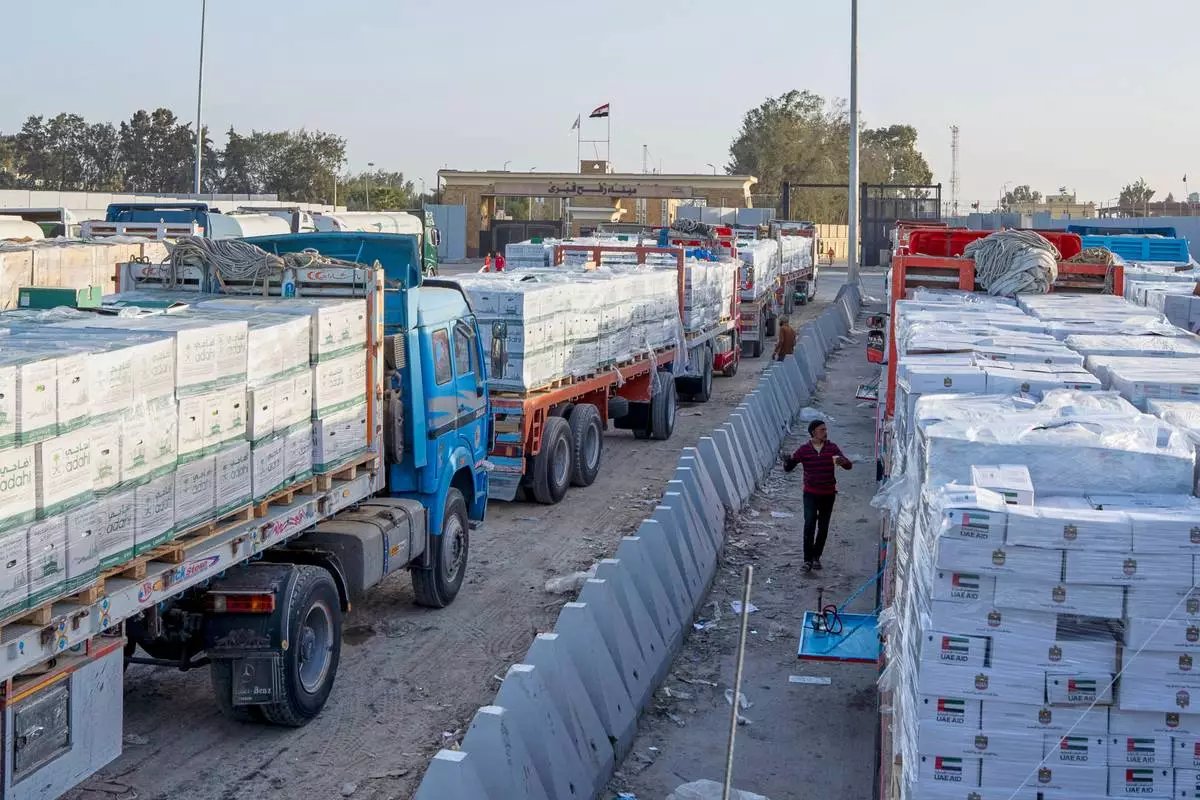
At the Egyptian Red Crescent warehouses in El Arish, workers showed the driver how consignments of food, medicine and shelter materials are coordinated before being sent onward. The National News reported that Hamilton saw aid parcels piled on lorries as Palestinians brace for another harsh winter in the strip, with Israel accused of blocking urgently needed supplies.
Governor Megawer said the visit was intended to give Hamilton a closer look at Egypt's efforts to deliver humanitarian assistance, according to the North Sinai governorate. Video shared by the governor's office showed the seven-time world champion shaking hands with aid workers and listening as they described their work.
Deliveries still far below the promised level
The backdrop to the visit is stark. Although a ceasefire agreement reached last year halted major combat operations, the amount of humanitarian aid entering Gaza continues to fall well short of the agreed minimum of 600 trucks a day. Haaretz reported that deliveries remain substantially below that threshold, leaving the territory chronically short of food, medicine and shelter materials.
Israeli forces have meanwhile continued to advance inside Gaza, expanding their control from 53 percent of the territory to at least 60 percent, according to an independent commission of United Nations experts cited in the coverage. The combination of restricted crossings and expanding military control has made the Egyptian Red Crescent's warehouses in El Arish one of the most important staging points for whatever aid does get through.
Floods compound the crisis
Hamilton's visit also came in the same week that heavy rain and harsh flooding overwhelmed Gaza, killing at least five people, including four children, and sweeping away tens of thousands of tents sheltering displaced families. The flooding has added a new layer of urgency to the aid effort, with winter approaching and shelter materials among the most urgently needed supplies.
The timing underlined the point Hamilton's hosts were making: the bottleneck is not a shortage of goodwill or of supplies waiting on the Egyptian side, but the pace at which they are allowed to cross. Trucks loaded with parcels can sit at Rafah while the needs on the other side of the border grow by the day.
A voice beyond the racetrack
Hamilton has long used his platform beyond Formula One. In 2021 he founded Mission 44, an organisation focused on improving opportunities in education and employment for young people. He has also spoken repeatedly about humanitarian crises, and his recent calls for greater attention to conflicts in Palestine, Sudan, Syria and the Democratic Republic of Congo preceded the Rafah trip.
The visit places him in a small but growing group of global sports figures who have travelled to the region to see the aid effort at first hand rather than commenting from a distance. Whether the attention translates into more trucks crossing the border will be measured in the weeks ahead, as winter sets in and the flood damage is assessed.
What happens next
The test of the visit's impact is practical, not symbolic. Aid agencies will be watching whether daily truck numbers move closer to the 600-a-day level agreed under the ceasefire, and whether shelter materials reach the families whose tents were destroyed in this week's flooding. For now, the warehouses in El Arish remain stocked with supplies waiting to cross — and the crossing itself remains the chokepoint.
Hamilton returns to the racetrack with the season continuing, but his hosts in North Sinai will be hoping the images from Rafah keep the focus on the aid pipeline long after the visit fades from the sports pages.
Key takeaways
- Lewis Hamilton visited the Egyptian side of the Rafah crossing and Egyptian Red Crescent aid warehouses in El Arish on 10 November 2026, two days after his 400th Formula One race start.
- He was received by North Sinai Governor Khaled Megawer and met aid workers coordinating relief supplies bound for Gaza.
- Aid entering Gaza remains far below the minimum of 600 trucks a day agreed under last year's ceasefire.
- The visit came the same week heavy rain and flooding in Gaza killed at least five people, including four children, and swept away tens of thousands of tents.
- Hamilton did not enter Gaza; the visit stayed on the Egyptian side of the border.
Frequently Asked Questions
Why did Lewis Hamilton visit the Rafah crossing?
Hamilton travelled to Egypt's Rafah crossing on 10 November 2026 to see first-hand the efforts to deliver humanitarian aid to Gaza. He toured the Egyptian side of the crossing and visited Egyptian Red Crescent warehouses in El Arish, where relief supplies are prepared and coordinated before being sent to Gaza.
Did Lewis Hamilton enter Gaza?
No. The visit remained entirely on the Egyptian side of the border. Hamilton toured the Rafah crossing and the aid warehouses in El Arish but did not cross into the Gaza Strip.
How much aid is reaching Gaza?
Aid deliveries remain far below the minimum of 600 trucks a day agreed under the ceasefire reached last year. Despite the halt to major combat operations, access constraints continue to limit the flow of food, medicine and shelter materials into the territory.
What is the Egyptian Red Crescent's role at Rafah?
The Egyptian Red Crescent operates logistics warehouses in El Arish that serve as a key staging point for supplies bound for Gaza. Its workers receive, sort and coordinate consignments before they are sent toward the Rafah crossing.
Why does the visit matter?
Rafah is Gaza's only land terminal that bypasses the occupied territories, and it has repeatedly been used to restrict aid entry. Hamilton's visit drew global attention to the aid pipeline at a moment when flooding has destroyed tens of thousands of tents and winter is approaching.
Sources
- Al Jazeera — F1 champion Lewis Hamilton visits Gaza border
- The National News — F1 legend Lewis Hamilton sees aid parcels waiting at Gaza border
- Haaretz — Formula 1 star Lewis Hamilton visits Gaza humanitarian aid facilities in Egypt
- Gulf News — Lewis Hamilton visits Gaza-Egypt border to see humanitarian work for Palestinians