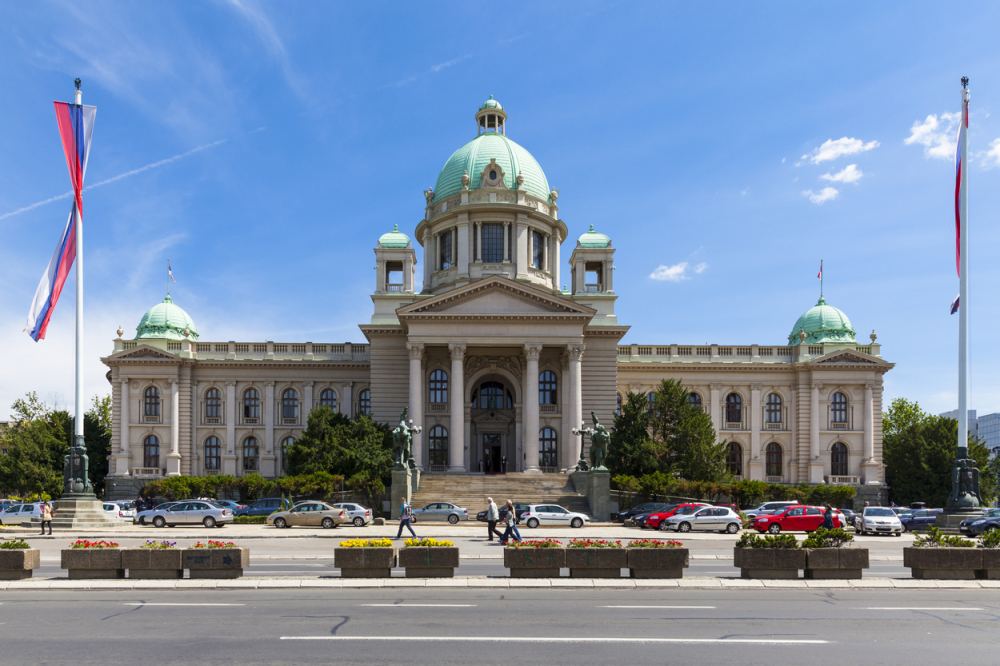
Serbia's student-backed Student List formally took its seats in parliament on Tuesday, November 17, 2026, opening the first session of a new National Assembly after its October election victory ended 14 years of rule by Aleksandar Vucic's Serbian Progressive Party (SNS). Deputies cheered on by hundreds of supporters walked a red carpet into the parliament building in Belgrade, turning a protest movement born on university campuses into the country's governing majority, according to Reuters.
The inaugural session formally recognises the movement's majority and is the first step toward forming a government. Led by Aleksandar Cupic, tipped to become the new parliament speaker, the deputies gathered in a park near the assembly before walking together into the building — a deliberately collective entrance that underlined how different this parliament will look from the one it replaces.
Table of Contents
- A red-carpet entrance for an unlikely majority
- Who the new deputies are
- The numbers behind the victory
- The road ahead: speaker, government, president
- Vucic takes a seat on the opposition benches
- From the Novi Sad tragedy to power
- Key takeaways
- Frequently Asked Questions
- Sources
- Chronicle related reading
A red-carpet entrance for an unlikely majority
The first sitting of the new National Assembly began at 10:00 on Tuesday, in a session called by outgoing speaker Ana Brnabic after election authorities certified the final results. The Student List holds 140 of the assembly's 250 seats — enough to govern alone, without coalition partners — while Vucic's SNS won 103. Minority parties took the remaining seven seats.
The session opened with the formal confirmation of deputies' mandates, followed by the election of a new speaker and deputy speakers and the formation of parliamentary bodies. Cupic, who led the deputies into the building, is expected to take the speaker's chair later on Tuesday.
For a movement that two years ago had no party, no leader and no electoral experience, the ceremony marked an extraordinary reversal of fortune. Hundreds of supporters gathered outside the assembly to cheer the deputies in, in scenes that echoed the street celebrations that followed the election result last month.
Who the new deputies are
The Student List is not a conventional political party. Its candidates were chosen by student assemblies and include academics, professionals, farmers, actors and activists — many of them people who had never stood for office before. That breadth was part of its appeal: it presented itself as a citizens' movement rather than a party machine, and it drew support well beyond university towns.
That same inexperience is now its biggest challenge. Governing requires drafting legislation, managing ministries and negotiating with a bureaucracy staffed largely by SNS appointees. The movement has promised to restore democracy and the rule of law and to end the corruption, cronyism and alleged organised-crime links it says thrived under Vucic — promises that will now be tested against the daily business of running a state.
The numbers behind the victory
The Republic Electoral Commission's final report, adopted on November 5 with mandates allocated on November 6, gives the Student List 2,354,417 votes — about 53.69 per cent of valid ballots — and 140 seats. The SNS alliance took 1,731,323 votes and 103 seats. The Student List's 140 seats amount to 56 per cent of the chamber, comfortably above the 126 needed for an absolute majority.
The scale of the win is what made Tuesday's session possible without the coalition bargaining that usually follows Serbian elections. It also means the movement owns the outcome: there is no junior partner to share the blame if its government stalls.
The road ahead: speaker, government, president
Tuesday's session is only the first step in a tight constitutional timetable. Once the speaker and parliamentary bodies are in place, a new government must be voted into office within 90 days. And a snap presidential election must be called by November 27 and held by December 27 — a contest that will decide who replaces Vucic in the presidency and could become the movement's next electoral test.
The movement must also decide its direction on the two questions that have defined Serbian politics for a generation: the pace of European Union integration and the unresolved status of Kosovo. Neither featured prominently in a campaign fought mainly on corruption and democratic standards, but both will demand answers quickly once a new government takes office.
Vucic takes a seat on the opposition benches
In a striking symbol of the power shift, Vucic himself will sit in the new parliament as one of the 103 opposition lawmakers from his SNS party. The man who dominated Serbian politics for more than a decade — as prime minister from 2014 and president from 2017 — will now argue his case from the benches he used to control.
Vucic conceded defeat on election night, saying he would not challenge the result in court in order to avoid "unrest and clashes in the streets," while blaming European countries and an "American deep state" for his loss. His presence in the chamber guarantees that the new majority will face a formidable and experienced opponent from day one.
From the Novi Sad tragedy to power
The movement traces its origins to November 2024, when a concrete canopy collapsed at the railway station in Novi Sad, Serbia's second city, killing 16 people. The disaster became a symbol of everything the protesters said was wrong with the country: shoddy public works, opaque contracts and a state that refused accountability.
In the months that followed, students occupied faculties, organised marches that drew hundreds of thousands, and demanded early elections. The government responded with a mix of concessions and crackdowns. When Vucic called a snap election in September 2026, hoping to renew his mandate and crush the protest movement at the ballot box, voters used the election he called to remove him.
Tuesday's session closes the protest chapter and opens the governing one. The students who marched against corruption now have to prove they can run a country without it — and the clock, with a government deadline of 90 days and a presidential election within weeks, is already running.
Key takeaways
- Serbia's student-backed Student List took its seats in parliament on Tuesday, November 17, 2026, opening the first session of the new National Assembly.
- The movement holds 140 of 250 seats — an absolute majority — after winning 2,354,417 votes (53.69 per cent of valid ballots) in the October 25 election.
- Aleksandar Cupic, who led the deputies into the building, is tipped to become the new parliament speaker.
- A new government must be voted into office within 90 days, and a snap presidential election must be called by November 27 and held by December 27.
- Aleksandar Vucic will sit in parliament as an opposition lawmaker after 14 years in power.
- The movement grew out of protests sparked by the November 2024 Novi Sad station canopy collapse, which killed 16 people.
Frequently Asked Questions
Who took their seats in Serbia's parliament on November 17?
Deputies from the Student List, the student-backed movement that won Serbia's snap parliamentary election on October 25, 2026. The movement holds 140 of the 250 seats in the National Assembly, enough to govern alone.
Who is expected to become the new parliament speaker?
Aleksandar Cupic, who led the Student List deputies into the parliament building on Tuesday, is tipped to be elected the new speaker later the same day.
What happens next in Serbia?
Parliament must first elect a speaker and form its bodies, then a new government must be voted into office within 90 days. A snap presidential election must also be called by November 27 and held by December 27.
How many seats did Vucic's party win?
The Serbian Progressive Party (SNS) won 103 seats in the 250-member assembly, with 1,731,323 votes. Vucic himself will sit in parliament as an opposition lawmaker.
What triggered the student movement?
The movement grew out of protests that began after a concrete canopy collapsed at Novi Sad railway station in November 2024, killing 16 people. The disaster became a symbol of corruption and lack of accountability, sparking nearly two years of demonstrations.
Sources
- Reuters — Serbia's Student List deputies take seats in parliament after landmark election win
- Bangkok Post — Serbian students enter parliament after historic election
- Daily Sabah — Serbia swears in new parliament after students-led ballot revolution