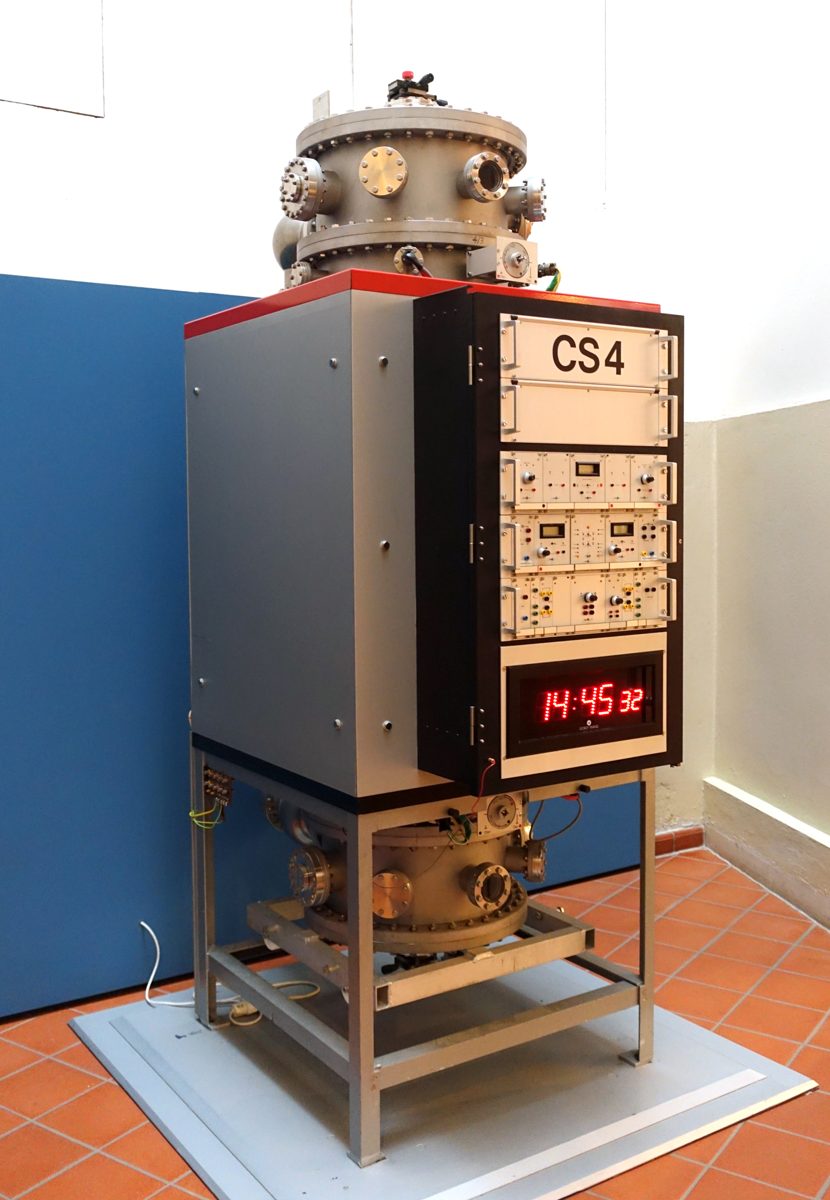
The world's official timekeepers have voted to abolish the leap second, the tiny fudge that has been added to global clocks 27 times since 1972. At their 28th meeting in Versailles on October 15, delegates from 69 member states of the General Conference on Weights and Measures (CGPM) agreed to replace it with a leap hour — a correction so rare it will likely never be needed for thousands of years. The decision ends roughly three decades of scientific argument and, crucially, removes the looming threat of a "negative leap second" that engineers warned could knock out computer systems worldwide.
The resolution was formally introduced by metrologist Noël Dimarcq of the Côte d'Azur Observatory in Nice, and was carried by a majority vote — unanimity was not required. As Nature reports, the new rule lets official time drift from the Earth's rotation by up to a full hour before any correction is made, effectively pushing the problem of keeping clocks aligned with the sun onto distant future generations.
Table of Contents
- What the delegates decided
- Why a single second caused so much trouble
- The 'negative second' that terrified engineers
- What the leap hour means in practice
- A debate three decades in the making
- Key takeaways
- Frequently Asked Questions
- Sources
- Related coverage
What the delegates decided
Coordinated Universal Time (UTC) — the reference time used by everything from air-traffic control to stock exchanges — is defined by atomic clocks. Astronomical time (UT1), by contrast, follows the Earth's fickle rotation, which speeds up and slows down under the influence of the planet's core, oceans, tides, melting ice and atmospheric currents. To stop the two scales drifting apart, timekeepers have been inserting a leap second into UTC whenever the gap approached 0.9 seconds — 27 times since 1972, most recently at the end of 2016.
Under the resolution adopted in Versailles, the permitted gap rises from one second to 3,600 seconds — a full hour. As Scientific American explains, this ends the practice of adding one-second corrections every couple of years and creates the much rarer leap hour instead.
"This is a historical moment, a decisive step for UTC," Dimarcq told Nature. "We now have an international reference time scale that is continuous for the next millennia." Georgette Macdonald, director general of the National Research Council of Canada's Metrology Research Centre, who supported the resolution, said: "This decision will ensure the continuity and relevance of UTC for centuries to come."
Why a single second caused so much trouble
One extra second sounds harmless, but the world's digital infrastructure proved remarkably fragile in the face of a minute that lasts 61 seconds. When a leap second was added in 2012, systems froze or went offline: LinkedIn and Reddit crashed, and Qantas's ticket-booking systems collapsed, delaying flights. In July 2022, engineers at Meta warned that every leap second was "a major source of pain for people who manage hardware infrastructures."
The problem is that modern computing infrastructure assumes time is a smooth, continuous stream. GPS satellites, financial-trading timestamps, electricity grids and telecommunications all lean on the steady tick of atomic clocks. An abrupt inserted second breaks that assumption, and the software that must absorb it is scattered across countless legacy systems.
As physicist Jeff Sherman of the US National Institute of Standards and Technology put it to CNN's Katie Hunt, Earth's rotation makes it a "lousy" clock — while atomic clocks, defined since 1967 by 9,192,631,770 oscillations of a cesium-133 atom, tick with rock-solid regularity, Smithsonian Magazine notes.
The 'negative second' that terrified engineers
The decision was brought forward by a new and unprecedented danger: the Earth's rotation has recently been speeding up, which meant timekeepers might soon have had to remove a second for the first time in history — a negative leap second, in which a minute would last just 59 seconds.
That prospect alarmed engineers even more than the familiar 61-second minute, because no software in the world has ever been tested against one. Scientists estimated roughly a 30 percent chance that a negative leap second would be needed within the next decade, prompting officials to settle the matter now rather than risk the first negative adjustment hitting untested global systems, The Guardian reports.
Dr Setnam Shemar, principal scientist in the time and frequency department at the UK's National Physical Laboratory, noted that checking every vulnerable system worldwide would have been enormously costly for companies — and that some software, in a repeat of the 2012 incidents, could freeze or crash when its clock loses a second it expected to have.
What the leap hour means in practice
For almost everyone, nothing will change. The new tolerance of one hour means UTC can drift from astronomical time for centuries — the first leap hour is unlikely to be needed for thousands of years. Users who need precise Earth-rotation time, such as astronomers, will still be able to access UT1 data directly.
Shemar offered a reassuring comparison: "We already have daylight saving where we change by an hour and no one gets bothered about that, apart from losing sleep or getting an extra hour's sleep." The leap hour, by contrast, will simply never trouble anyone alive today.
Christian Bizouard, director of the IERS Earth Orientation Center in France, was candid about the timescale: "It's kind of a philosophical discussion, because if a leap hour happens, it won't be for a very, very long time," he told The Guardian. "What we are doing is pushing back the decision."
A debate three decades in the making
The vote was not the first attempt to fix the problem. A change in this direction was first agreed in 2022, when delegates set 2035 as the target for widening the allowable gap between UTC and UT1 — but the acceleration of the Earth's rotation forced the issue sooner.
"After 30 years of debates, we are ready," said Dimarcq ahead of the vote, Scientific American reports. Shemar echoed him: "After 30 years of debate, the leap second is making way for the leap hour. This will reduce the risks to the systems and national infrastructure that depend on accurate time while still preserving the fundamental link between our global time system and the rotation of the Earth."
The fundamental link remains intact. UTC will still be anchored to the Earth's rotation — just far more loosely, with a drift of up to an hour allowed before a leap hour is triggered. That keeps the reference tied to the sun for the deep future while giving the world's computers the continuous, unbroken time they need.
Key takeaways
- Delegates from 69 countries voted at the CGPM in Versailles on October 15 to abolish the leap second and replace it with a leap hour.
- UTC will now be allowed to drift from Earth-rotation time (UT1) by up to one hour before a correction is needed — meaning the first leap hour is likely thousands of years away.
- The move ends the threat of a "negative leap second," which Earth's recent faster rotation made likely within a decade and which untested software might not have survived.
- Past leap seconds crashed Reddit, LinkedIn and Qantas's booking systems in 2012, and Meta warned in 2022 that each one was "a major source of pain" for infrastructure engineers.
Frequently Asked Questions
What is a leap second?
A leap second is an extra second occasionally added to Coordinated Universal Time (UTC) to keep it aligned with the Earth's rotation. Since the planet's spin is irregular — influenced by tides, melting ice and movements in its core — atomic time and astronomical time slowly drift apart. Timekeepers have added 27 leap seconds since 1972, the last in 2016, keeping the two scales within 0.9 seconds of each other.
Why was the leap second abolished?
Because it kept breaking computers. The 61-second minute caused crashes and outages at companies including Reddit, LinkedIn and Qantas in 2012, and the recently accelerating Earth raised the spectre of a negative leap second — a 59-second minute that no software has ever been tested against. Abolishing it removes that risk permanently.
What is a leap hour, and when will the first one happen?
A leap hour is the replacement correction: instead of adding one second whenever UTC drifts from Earth-rotation time by 0.9 seconds, timekeepers will now wait until the drift reaches a full hour (3,600 seconds) and adjust by an hour. Because the drift accumulates so slowly, the first leap hour is unlikely to be needed for thousands of years.
Does this change what time my clock shows?
No. The new tolerance only concerns the tiny, slow drift between atomic time and astronomical time, which is measured in milliseconds per year. Your devices, appointments and time zones are unaffected — and the one-hour-per-thousands-of-years adjustment is, as one scientist noted, no more disruptive than the daylight-saving changes we already live with.
Sources
- Elizabeth Gibney, "World's timekeepers upend how they adjust time to avoid catastrophic 'negative second'", Nature
- Emma Gometz, "Scientists vote to end leap seconds, redefining how the world keeps time", Scientific American
- Richard Hartley, "Time's up for the leap second as scientists swap it for the leap hour", The Guardian
- "What Is Leap Second And Why Is It Being Phased Out?", NDTV